
Sorry, nothing in cart.
Albendazole: Uses, Dosage, Benefits, and Side Effects
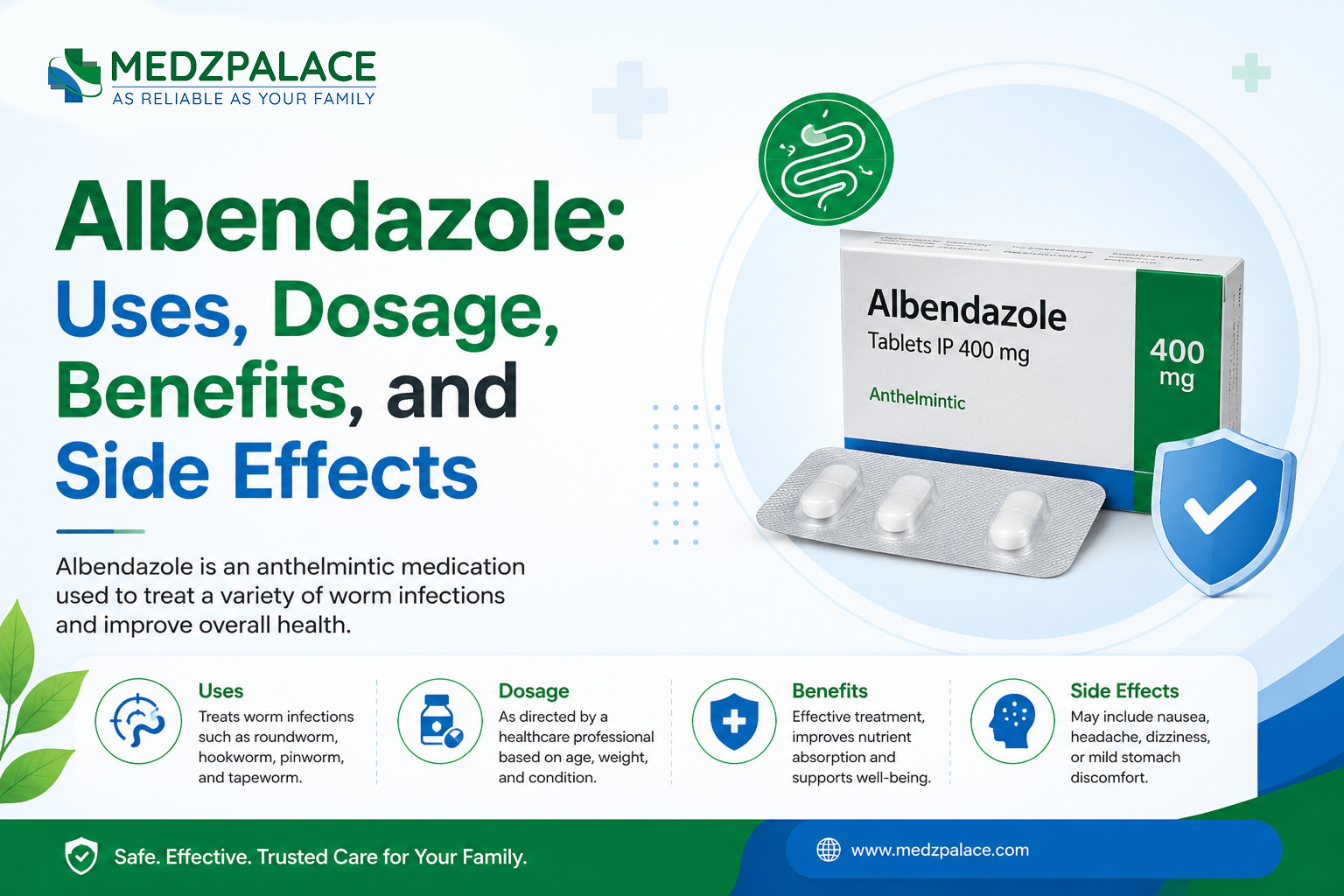
Albendazole is a highly effective, broad-spectrum anthelmintic medication used to treat a wide variety of parasitic worm infections. As a member of the benzimidazole class of drugs, it plays a critical role in global public health, particularly in combating infections caused by roundworms, tapeworms, and flukes. Its ability to target both larval and adult stages of many helminths makes it a cornerstone therapy for conditions ranging from common soil-transmitted intestinal worms to more severe, systemic infections like neurocysticercosis. This comprehensive clinical guide will explore the mechanism of action, primary uses, dosage guidelines, benefits, and potential side effects of albendazole, providing a thorough understanding of this essential medicine.
What is Albendazole and How Does It Work?
Understanding how albendazole functions at a cellular level is key to appreciating its efficacy. The drug targets fundamental biological processes within the parasite, leading to its eventual eradication from the host’s body.
Mechanism of Action
Albendazole’s primary mechanism of action is the selective and irreversible inhibition of microtubule polymerization in parasite cells. It accomplishes this by binding to a protein called beta-tubulin, a key building block of microtubules. Microtubules are essential for numerous vital cellular functions in parasites, including:
- Cellular Structure and Motility: They form the parasite’s internal “skeleton,” providing structural integrity.
- Nutrient Absorption: Intestinal cells of worms use microtubules to absorb glucose and other nutrients from the host’s gut. By disrupting this process, albendazole effectively starves the parasite.
- Cell Division (Mitosis): Microtubules are crucial for forming the mitotic spindle, which is necessary for cell replication and growth.
- Intracellular Transport: They act as “highways” for moving vesicles and organelles within the cell.
By disrupting these functions, albendazole leads to the parasite’s immobilization, depleted energy reserves, and inability to reproduce. This ultimately results in paralysis and death. Importantly, albendazole has a much higher affinity for parasite beta-tubulin than for mammalian beta-tubulin, which accounts for its selective toxicity and relatively favorable safety profile in humans.
Furthermore, albendazole exhibits ovicidal (kills eggs), larvicidal (kills larvae), and vermicidal (kills adult worms) properties, making it effective across different life stages of the parasite.
Pharmacokinetics: Absorption, Metabolism, and Excretion
The way the body processes albendazole is crucial for its therapeutic effect, especially when treating infections outside the gastrointestinal tract.
- Absorption: Albendazole is poorly absorbed from the gut when taken on an empty stomach. This is adequate for treating intestinal worms, as the drug remains concentrated where the parasites are. However, for systemic infections like neurocysticercosis, higher absorption is needed. Consuming albendazole with a high-fat meal can increase its systemic bioavailability by up to five times.
- Metabolism: After absorption, albendazole undergoes rapid and extensive “first-pass” metabolism in the liver. It is quickly converted into its primary active metabolite, albendazole sulfoxide. This metabolite is responsible for most of the drug’s systemic anthelmintic activity.
- Distribution: Albendazole sulfoxide is well-distributed throughout the body and can penetrate into various tissues, including the cerebrospinal fluid (CSF), bile, and hydatid cysts, which is essential for treating invasive parasitic diseases.
- Excretion: The active metabolite is further metabolized in the liver and primarily excreted in the bile, with only a small amount eliminated in the urine.
Primary Medical Uses of Albendazole
Albendazole is approved and recommended for a diverse range of helminthic infections, from common intestinal parasites to life-threatening tissue-invasive diseases.
Neurocysticercosis
Neurocysticercosis is a serious infection of the central nervous system caused by the larval cysts of the pork tapeworm, Taenia solium. It is a leading cause of acquired epilepsy worldwide. Albendazole is a first-line treatment, capable of crossing the blood-brain barrier to kill the cysts within the brain. Treatment is often accompanied by corticosteroids (like dexamethasone) to manage the inflammation that occurs as the cysts die, which can otherwise lead to dangerous swelling and increased intracranial pressure.
Hydatid Disease (Echinococcosis)
Hydatid disease is caused by the larval stages of tapeworms of the Echinococcus genus. The most common forms are cystic echinococcosis (caused by E. granulosus) and alveolar echinococcosis (caused by E. multilocularis), which form large, destructive cysts in organs like the liver and lungs. Albendazole is a primary medical therapy for inoperable cysts and is also used as an adjunctive treatment before and after surgical removal of cysts to reduce the risk of spillage and recurrence.
Common Intestinal Helminths (Soil-Transmitted Helminths)
Albendazole is highly effective against the most common intestinal worms that affect hundreds of millions of people globally, often through a simple single-dose regimen.
- Ascariasis (Giant Roundworm): Caused by Ascaris lumbricoides.
- Trichuriasis (Whipworm): Caused by Trichuris trichiura.
- Hookworm Infections: Caused by Ancylostoma duodenale and Necator americanus.
- Pinworm Infection (Enterobiasis): Caused by Enterobius vermicularis, the most common worm infection in the United States.
- Strongyloidiasis (Threadworm): Caused by Strongyloides stercoralis, although ivermectin is often the preferred first-line agent.
Other Parasitic Infections (Off-Label and Less Common Uses)
Due to its broad-spectrum nature, albendazole is also used to treat several other parasitic diseases:
- Giardiasis: An intestinal infection caused by the protozoan Giardia lamblia. Albendazole is often used as an alternative to metronidazole.
- Microsporidiosis: An opportunistic infection seen in immunocompromised individuals, particularly those with HIV/AIDS.
- Lymphatic Filariasis (Elephantiasis): Albendazole is used in combination with other drugs (like ivermectin or diethylcarbamazine) in mass drug administration (MDA) programs to eliminate this disease.
- Toxocariasis: An infection caused by the larvae of dog or cat roundworms (Toxocara canis or T. cati), which can cause visceral larva migrans (affecting organs) or ocular larva migrans (affecting the eye).
- Trichinosis: Caused by the roundworm Trichinella spiralis, contracted from undercooked meat.
Dosage and Administration Guidelines
The dosage, duration, and administration of albendazole vary significantly depending on the type of infection being treated, the patient’s age, and their body weight. All dosing must be determined by a qualified healthcare provider.
Dosage for Systemic Infections
For infections like neurocysticercosis and hydatid disease, higher doses and longer treatment courses are necessary to ensure the drug reaches therapeutic concentrations in the affected tissues.
- Neurocysticercosis: A typical adult dose is based on weight, often 15 mg/kg/day divided into two doses, for a course of 8 to 30 days. It must be taken with a fatty meal to maximize absorption.
- Hydatid Disease: Treatment involves cycles. A common regimen is 400 mg twice daily for adults for 28 days, followed by a 14-day drug-free interval. This cycle may be repeated three or more times. Again, administration with a fatty meal is crucial.
Dosage for Intestinal Infections
Treatment for common gut worms is much simpler and often involves a single dose.
- Ascariasis, Hookworm, Trichuriasis: For adults and children over two years, a single 400 mg dose is typically sufficient.
- Pinworm (Enterobiasis): A single 400 mg dose is given, and it is often repeated in two weeks to kill any newly hatched worms and prevent reinfection, as the eggs are highly contagious.
- Giardiasis: A typical course is 400 mg once daily for five days.
Special Populations
- Pediatric Use: Dosage for children is often based on weight. Chewable tablets and oral suspensions are available for children who cannot swallow pills.
- Pregnancy and Lactation: Albendazole is classified as Pregnancy Category C. It has shown teratogenic effects in animal studies and is generally contraindicated during pregnancy. Women of childbearing age should have a negative pregnancy test before starting treatment and use effective contraception during and for one month after therapy. Small amounts of the drug pass into breast milk, so it should be used with caution during lactation.
- Liver Impairment: As albendazole is heavily metabolized by the liver, it should be used with extreme caution in patients with hepatic impairment. Close monitoring of liver function is essential.
Benefits and Efficacy of Albendazole
The widespread use of albendazole is a testament to its significant benefits in both individual patient care and large-scale public health initiatives.
- Broad-Spectrum Activity: Its ability to treat a vast range of different worms with a single medication is a major advantage.
- High Cure Rates: For most common intestinal worms, albendazole achieves cure rates exceeding 90% with a single dose, effectively reducing worm burden and alleviating associated symptoms like malnutrition, anemia, and abdominal pain.
- Role in Public Health: Albendazole is a key tool in Mass Drug Administration (MDA) programs led by the World Health Organization (WHO) to control and eliminate neglected tropical diseases. These deworming programs have been shown to improve the health, nutritional status, and cognitive development of children in endemic regions.
- Convenience of Dosing: The single-dose regimen for intestinal worms promotes high compliance, which is crucial for the success of community-wide treatment programs.
Potential Side Effects and Safety Precautions
While generally well-tolerated, especially in single-dose regimens, albendazole can cause side effects. The risk and severity increase with longer-term, high-dose therapy used for systemic infections.
Common Side Effects
These are typically mild and transient:
- Headache and dizziness
- Nausea, vomiting, and abdominal pain
- Diarrhea
- Temporary hair loss (alopecia) with long-term use
Serious Side Effects (Require Medical Attention)
During long-term treatment, regular monitoring is crucial to detect more serious adverse effects.
- Hepatotoxicity (Liver Injury): Albendazole can cause elevations in liver enzymes. While usually reversible upon stopping the drug, rare cases of acute liver failure have been reported. Liver function tests should be monitored before starting each treatment cycle and at least every two weeks during therapy.
- Bone Marrow Suppression: The drug can cause a dangerous drop in white blood cell counts (leukopenia, agranulocytosis) or all blood cell types (pancytopenia). This risk is higher in patients with liver disease. Complete blood counts (CBC) should be monitored regularly during long-term use.
- Neurological Effects: In patients treated for neurocysticercosis, the inflammatory response to dying parasites can cause seizures, headaches, and increased pressure in the brain. This is managed with concurrent corticosteroid and anticonvulsant therapy.
- Severe Allergic Reactions: Though rare, severe skin reactions like Stevens-Johnson syndrome (SJS) and toxic epidermal necrolysis (TEN) can occur. Any new rash, fever, or blistering should be reported to a doctor immediately.
Frequently Asked Questions (FAQs)
Should I take albendazole with food?
It depends on the infection. For systemic infections like neurocysticercosis or hydatid disease, you must take it with a high-fat meal (e.g., with milk, cheese, or oil) to maximize absorption into your bloodstream. For common intestinal worms, it can be taken with or without food.
How long does it take for albendazole to work?
For intestinal worms, the medication begins working within hours to paralyze and kill the parasites, which may then be passed in the stool over the next few days. For systemic infections, the treatment course is much longer (weeks to months) to ensure all cysts or larvae are eliminated.
Can I drink alcohol while taking albendazole?
It is generally recommended to avoid or limit alcohol consumption while taking albendazole, especially during long-term therapy. Both alcohol and albendazole are processed by the liver, and combining them could increase the risk of liver-related side effects.
Is albendazole available over-the-counter?
In most countries, including the United States, United Kingdom, and Canada, albendazole is a prescription-only medication. A proper diagnosis from a healthcare provider is essential to ensure you are treating the correct type of infection and to monitor for potentially serious side effects.
What should I do if I miss a dose?
If you miss a dose, take it as soon as you remember. However, if it is almost time for your next scheduled dose, skip the missed dose and continue with your regular schedule. Do not take a double dose to make up for a missed one. If you are unsure, consult your doctor or pharmacist.
Medical Disclaimer
The information provided in this article is for educational and informational purposes only and is not intended as medical advice. It is not a substitute for professional medical advice, diagnosis, or treatment. Always seek the guidance of your physician or other qualified health provider with any questions you may have regarding a medical condition. Never disregard professional medical advice or delay in seeking it because of something you have read in this article.