
Sorry, nothing in cart.
Insomnia vs Poor Sleep: What’s the Difference?
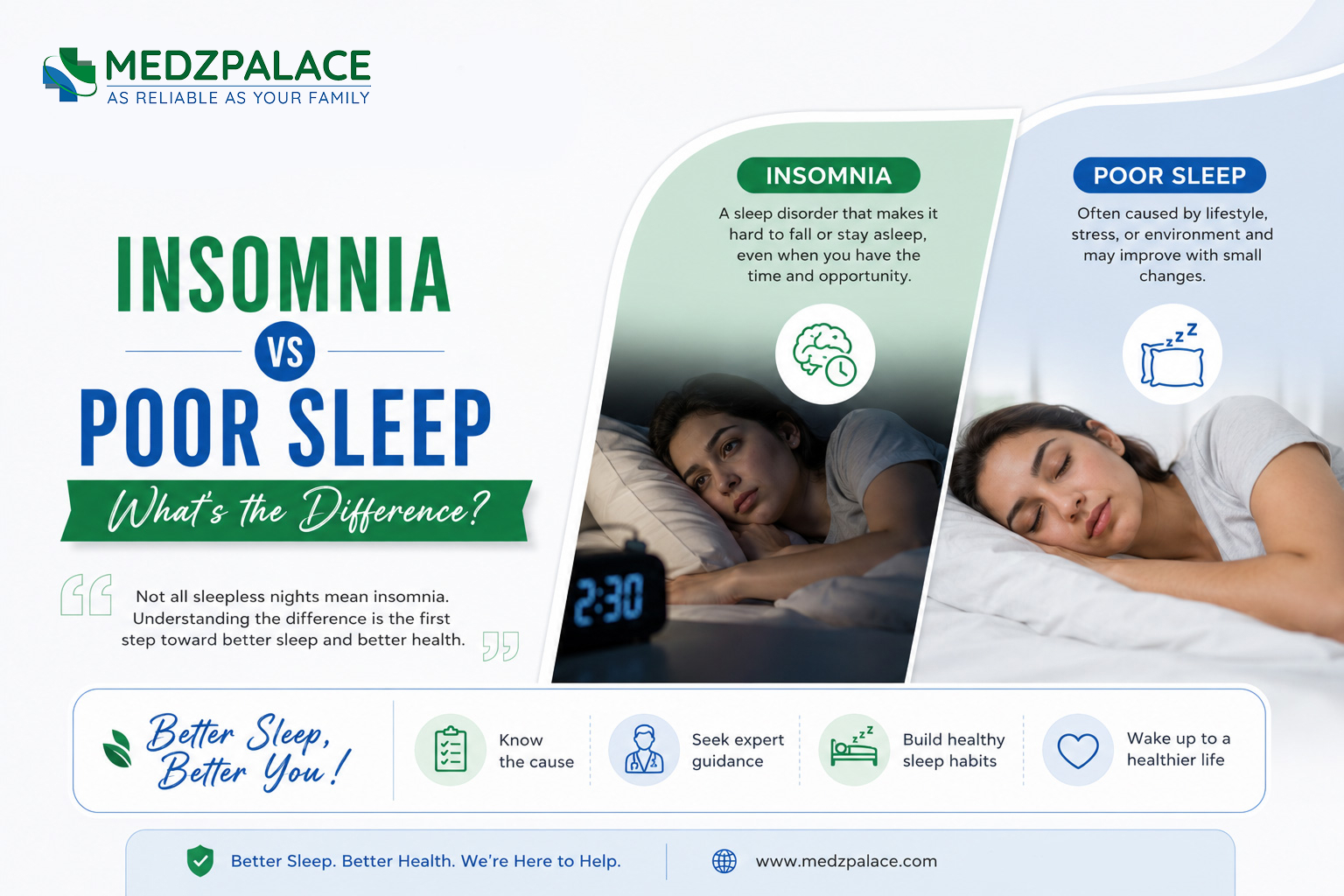
Tossing and turning, staring at the ceiling, and waking up feeling less than refreshed are experiences familiar to many. In casual conversation, we often lump these struggles under the umbrella of “poor sleep.” However, in the clinical world, there’s a crucial distinction between having a few bad nights and suffering from a diagnosable sleep disorder like insomnia. While all insomnia involves poor sleep, not all poor sleep qualifies as insomnia. Understanding this difference is the first step toward finding the right solution and reclaiming restful nights.
This article will provide a detailed clinical comparison between the general experience of poor sleep and the specific medical diagnosis of insomnia. We will explore the defining characteristics, causes, and appropriate management strategies for each, helping you identify when a temporary sleep issue might be a more persistent and serious health concern.
Understanding “Poor Sleep”: A Broad Spectrum of Issues
“Poor sleep” is a non-medical, descriptive term used to encompass a wide range of subjective sleep-related complaints. It’s a general label for any night that doesn’t feel restorative. This experience is often transient, situational, and directly linked to an identifiable trigger. While frustrating, it typically resolves once the underlying cause is addressed and doesn’t meet the specific frequency, duration, or impairment criteria required for a clinical diagnosis.
Common Characteristics of Poor Sleep
A person experiencing a bout of poor sleep might report one or more of the following, usually on an occasional basis:
- Situational Difficulty Falling Asleep: Taking longer than usual to fall asleep due to stress about an upcoming event, excitement, or a temporary disruption.
- Restless or Light Sleep: Feeling as though you’re not sleeping deeply, with minor noises or disturbances causing you to wake up easily.
- Occasional Nighttime Awakenings: Waking up once or twice during the night but generally being able to fall back asleep without significant difficulty.
- Waking Up Tired: Feeling groggy or not fully rested in the morning, but this feeling often improves as the day progresses.
- Sporadic Nature: These issues don’t follow a consistent pattern. You might have a bad night, followed by several nights of perfectly normal sleep.
Typical Causes of Poor Sleep
The triggers for poor sleep are often external or temporary. They are related to our environment, behaviors, and immediate circumstances. Identifying and modifying these factors is usually sufficient to restore a normal sleep pattern.
- Environmental Factors: A bedroom that is too hot, cold, bright, or noisy can easily disrupt sleep. A new mattress or an unfamiliar environment like a hotel room can also be a cause.
- Lifestyle Choices: Consuming caffeine or alcohol too close to bedtime, eating a large meal late at night, or engaging in vigorous exercise in the evening can interfere with the body’s natural sleep processes.
- Poor Sleep Hygiene: An inconsistent sleep schedule (including wildly different weekend and weekday wake-up times), using electronic devices with blue-light-emitting screens in bed, or not having a relaxing pre-sleep routine can contribute to poor sleep.
- Situational Stress and Anxiety: Worrying about a work deadline, an upcoming exam, a family argument, or other short-term stressors is a very common cause of temporary sleep disruption.
- Minor Medical Issues: A common cold, allergies causing congestion, or temporary aches and pains can make it difficult to get comfortable and sleep soundly.
Defining Insomnia: A Clinical Diagnosis
Insomnia is not just a bad night’s sleep; it is a specific, diagnosable medical condition classified as a sleep-wake disorder. Healthcare professionals use established criteria, such as those in the Diagnostic and Statistical Manual of Mental Disorders (DSM-5), to make a formal diagnosis. Insomnia is characterized by a persistent problem with sleep that causes significant daytime consequences, even when the individual has an adequate opportunity to sleep.
The Core Diagnostic Criteria for Insomnia
For a diagnosis of chronic insomnia, a patient’s symptoms must meet several specific criteria. This structured definition is what separates it from the general concept of poor sleep.
- Symptom Type: The patient reports a predominant dissatisfaction with sleep quantity or quality, associated with one (or more) of the following symptoms:
- Sleep-onset insomnia: Significant difficulty falling asleep at the beginning of the night.
- Sleep-maintenance insomnia: Frequent or prolonged awakenings during the night with difficulty returning to sleep.
- Late insomnia: Waking up much earlier than desired in the morning and being unable to fall back asleep.
- Frequency and Duration: The sleep disturbance occurs at least three nights per week and has been present for at least three months. (If it has been present for less than three months, it may be classified as acute or short-term insomnia).
- Daytime Impairment: The sleep difficulty causes clinically significant distress or impairment in important areas of daytime functioning. This is a critical component and can manifest as:
- Fatigue or low energy
- Impaired attention, concentration, or memory
- Poor performance at work or school
- Mood disturbances, such as irritability or depression
- Daytime sleepiness
- Behavioral problems like hyperactivity or aggression (especially in children)
- Adequate Opportunity for Sleep: The sleep problem persists despite the individual having enough time and a safe, comfortable environment dedicated to sleep.
- Exclusion Criteria: The insomnia is not better explained by another sleep-wake disorder (like sleep apnea or restless legs syndrome), the physiological effects of a substance (e.g., medication or drug abuse), or a coexisting mental or medical condition. When it occurs alongside another condition, it is significant enough to warrant separate clinical attention.
Types of Insomnia
Clinicians often categorize insomnia to better understand its context and guide treatment:
- Acute (Adjustment) Insomnia: A brief period of sleep difficulty, usually lasting days or weeks. It’s often triggered by a life stressor, such as a new job, a death in the family, or travel across time zones (jet lag).
- Chronic Insomnia: The long-term pattern of sleep difficulty that meets the diagnostic criteria mentioned above (3 nights/week for 3+ months). It can start as acute insomnia that never resolves or develop gradually.
- Comorbid Insomnia: Insomnia that occurs simultaneously with another medical or psychiatric condition. Conditions like chronic pain, depression, anxiety disorders, and gastroesophageal reflux disease (GERD) are commonly associated with insomnia.
Key Differentiators: A Side-by-Side Comparison
To crystallize the difference, let’s directly compare the features of poor sleep and clinical insomnia across several key domains.
Duration and Frequency
- Poor Sleep: Sporadic and unpredictable. It may happen once a month, for a few nights in a row during a stressful week, and then not again for a long time. There is no consistent pattern.
- Insomnia: Persistent and patterned. The definition requires symptoms to occur on at least three nights per week and to last for at least three months for a chronic diagnosis. This regularity is a hallmark of the disorder.
Impact on Daytime Functioning
- Poor Sleep: The next-day effects are usually mild and manageable. You might feel a bit “off,” groggy, or need an extra cup of coffee, but you can generally perform your daily tasks without significant disruption.
- Insomnia: The daytime consequences are clinically significant and impairing. The fatigue, cognitive deficits, and mood swings are severe enough to interfere with work performance, social relationships, and overall quality of life. This impairment is a required element for diagnosis.
Underlying Cause and Context
- Poor Sleep: The cause is typically external, obvious, and temporary (e.g., “I drank coffee too late,” “The neighbors were having a party”). Once the trigger is removed, sleep returns to normal.
- Insomnia: While it may begin with a trigger, insomnia often becomes a self-perpetuating problem. Individuals can develop maladaptive thoughts and behaviors, such as anxiety about not being able to sleep, which then becomes the primary driver of the sleeplessness. This “sleep anxiety” can persist long after the initial trigger is gone.
Diagnostic Status
- Poor Sleep: A subjective complaint. It’s a description of an experience, not a medical condition.
- Insomnia: A formal medical diagnosis made by a qualified healthcare professional based on specific, internationally recognized criteria.
When Does Poor Sleep Become Insomnia?
The transition from poor sleep to insomnia is a critical area of concern. A period of acute, stress-induced poor sleep can evolve into chronic insomnia if negative thought patterns and behaviors take root. For example, after a few nights of poor sleep, a person might start to dread bedtime, believing they “won’t be able to sleep.” They might start going to bed earlier or staying in bed later to “try” to get more sleep, which can paradoxically worsen the problem by weakening the association between the bed and sleep.
This cycle of anxiety and behavioral changes creates a conditioned or learned arousal around bedtime, transforming a temporary problem into a persistent disorder. Early intervention, focusing on good sleep hygiene and stress management, can often prevent this progression.
Management and Treatment Approaches
The correct approach to improving sleep depends entirely on whether you are dealing with occasional poor sleep or clinical insomnia.
Addressing Poor Sleep
For temporary bouts of poor sleep, the focus is on re-establishing healthy habits, known as sleep hygiene.
- Maintain a Consistent Schedule: Go to bed and wake up at roughly the same time every day, even on weekends.
- Optimize Your Sleep Environment: Ensure your bedroom is dark, quiet, cool, and comfortable.
- Create a Relaxing Bedtime Routine: Engage in calming activities for an hour before bed, such as reading a book, taking a warm bath, listening to soft music, or meditating.
- Avoid Stimulants and Disruptors: Limit caffeine and nicotine, especially in the afternoon and evening. Avoid alcohol close to bedtime; while it may help you fall asleep initially, it disrupts sleep quality later in the night.
- Get Out of Bed: If you can’t fall asleep after 20-30 minutes, get out of bed and do a quiet activity in another room until you feel sleepy.
- Manage Stress: Practice relaxation techniques like deep breathing or journaling to calm your mind before sleep.
Treating Clinical Insomnia
While good sleep hygiene is important, it is often insufficient on its own to treat chronic insomnia. Professional treatment is recommended and typically involves a more structured approach.
- Cognitive Behavioral Therapy for Insomnia (CBT-I): This is the gold-standard, first-line treatment recommended by the American College of Physicians. CBT-I is a multi-component therapy that addresses the thoughts and behaviors that perpetuate insomnia. It includes:
- Stimulus Control: Re-associating the bed and bedroom with sleep and intimacy only.
- Sleep Restriction: Limiting the time spent in bed to the actual amount of time the person is sleeping, thereby increasing sleep efficiency.
- Cognitive Restructuring: Identifying and challenging negative, unrealistic beliefs and anxieties about sleep.
- Relaxation Training: Teaching techniques to reduce physical and mental arousal.
- Pharmacotherapy (Medication): Prescription sleep medications (hypnotics) may be used, typically for short-term management or in conjunction with CBT-I. Their long-term use is debated due to potential side effects, tolerance, and dependence. A physician must carefully evaluate the risks and benefits for each patient.
Frequently Asked Questions (FAQs)
Can I have both poor sleep and insomnia?
In a clinical sense, insomnia is a specific and severe form of chronic poor sleep. If your experience of poor sleep meets the diagnostic criteria for insomnia (in terms of frequency, duration, and daytime impairment), then you have the medical disorder of insomnia. The term “poor sleep” becomes an inadequate descriptor for a defined medical condition.
I only struggle to sleep on Sunday nights. Is that insomnia?
This is a common phenomenon often linked to “Sunday scaries” or anxiety about the upcoming work week. If it only happens once a week, it does not meet the frequency criterion for chronic insomnia (at least three nights per week). It would be classified as situational poor sleep. However, if this one bad night causes severe impairment throughout the week and is highly distressing, it’s still worth discussing with a doctor.
Is it possible to self-diagnose insomnia?
While you can recognize the symptoms of insomnia in yourself, a formal diagnosis should be made by a healthcare professional. This is crucial because your sleep problems could be a symptom of another underlying and untreated medical condition, such as sleep apnea, restless legs syndrome, or a thyroid disorder. A proper evaluation ensures you receive the correct diagnosis and the most effective treatment plan.
How long should I wait before seeing a doctor about my sleep problems?
If your sleep difficulties are occasional and tied to obvious causes, you can try implementing better sleep hygiene practices first. However, you should consult a healthcare professional if your sleep problems persist for more than a few weeks, occur regularly, are causing significant distress, or are negatively impacting your mood, safety, and ability to function during the day.
Medical Disclaimer: The information provided in this article is for educational and informational purposes only and is not intended as medical advice. It is not a substitute for professional medical advice, diagnosis, or treatment. Always seek the advice of your physician or other qualified health provider with any questions you may have regarding a medical condition. Never disregard professional medical advice or delay in seeking it because of something you have read here.