
Sorry, nothing in cart.
Best Treatments for Sleep Disorders
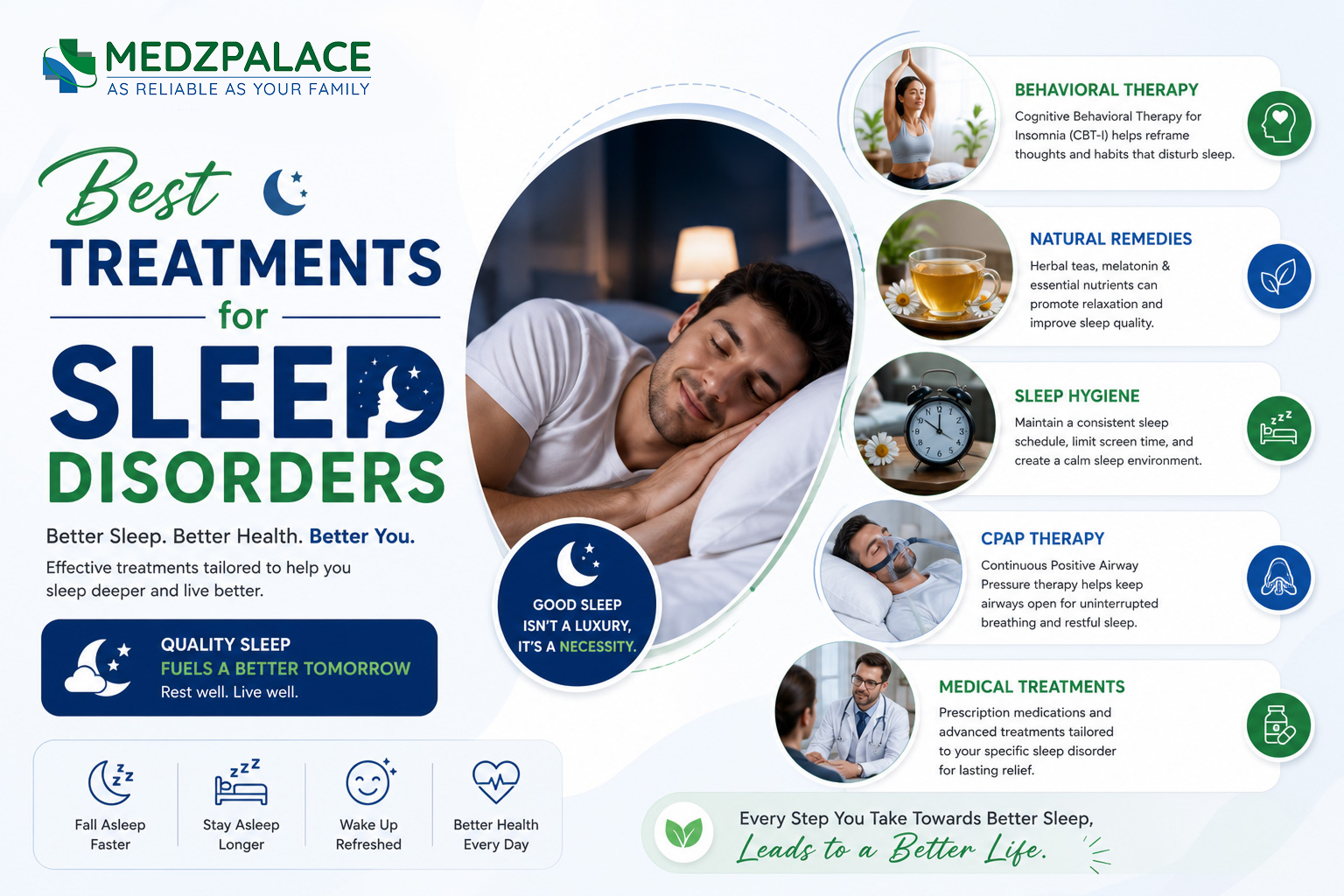
Sleep is a fundamental pillar of health, as essential as nutrition and exercise. Yet, for millions of people worldwide, restorative sleep is an elusive goal. Sleep disorders encompass a wide range of conditions that disrupt the normal sleep-wake cycle, leading to significant impairments in physical health, mental well-being, and daily functioning. While the experience of a sleepless night can be frustrating, chronic sleep disruption requires a structured, evidence-based approach to treatment. Fortunately, the field of sleep medicine has advanced significantly, offering a diverse array of effective treatments tailored to specific diagnoses. This article provides a comprehensive clinical overview of the best available treatments for common sleep disorders, from foundational behavioral therapies to advanced medical interventions.
The Crucial First Step: Accurate Diagnosis
Before any treatment can be effective, an accurate diagnosis is paramount. Self-diagnosing or treating symptoms without understanding the underlying cause can be ineffective and potentially harmful. A qualified healthcare provider, often a sleep specialist, will use several tools to identify the specific sleep disorder and its severity.
Key Diagnostic Methods:
- Clinical History and Physical Exam: A thorough discussion of your sleep patterns, symptoms, medical history, and lifestyle habits is the starting point. A physical exam can identify anatomical factors, such as a narrow airway, that may contribute to a disorder like sleep apnea.
- Sleep Diary: You may be asked to keep a detailed log of your sleep for one to two weeks. This diary tracks bedtimes, wake times, nighttime awakenings, daily naps, and the consumption of caffeine and alcohol, providing valuable real-world data.
- Polysomnography (PSG): Considered the gold standard in sleep diagnostics, a PSG is an overnight study conducted in a sleep laboratory. It records brain waves (EEG), eye movements, muscle activity, heart rate, breathing patterns, and blood oxygen levels to provide a complete picture of your sleep architecture.
- Home Sleep Apnea Test (HSAT): For suspected cases of moderate to severe obstructive sleep apnea, an HSAT is a convenient alternative to a full PSG. This portable device monitors breathing, oxygen levels, and effort while you sleep in your own bed.
- Multiple Sleep Latency Test (MSLT): This test, typically performed the day after a PSG, is the primary tool for diagnosing narcolepsy. It measures how quickly you fall asleep during a series of scheduled nap opportunities throughout the day.
Foundational Treatments: Lifestyle and Behavioral Therapies
For many sleep disorders, particularly insomnia, behavioral and lifestyle-based therapies are the first-line and most recommended treatments. They are safe, highly effective, and provide long-lasting skills for managing sleep without the side effects of medication.
Cognitive Behavioral Therapy for Insomnia (CBT-I)
CBT-I is recognized by the American College of Physicians as the gold-standard treatment for chronic insomnia. It is a structured program that helps you identify and replace thoughts and behaviors that cause or worsen sleep problems with habits that promote sound sleep. CBT-I is more than just sleep advice; it’s a multi-component therapy that includes:
- Cognitive Restructuring: This technique teaches you to identify, challenge, and change the anxious and negative thoughts that can race through your mind at night. For example, replacing the thought, “If I don’t sleep now, I’ll be useless tomorrow,” with a more balanced one, “I may be tired tomorrow, but I have managed on less sleep before and I will get through the day.”
- Stimulus Control Therapy: This aims to re-associate your bed and bedroom with sleep and intimacy only. The rules are strict but effective: go to bed only when sleepy, get out of bed if you can’t fall asleep within 20 minutes, and use the bed for nothing else (no TV, work, or eating).
- Sleep Restriction Therapy: While it sounds counterintuitive, this involves limiting your time in bed to the actual amount of time you spend sleeping. This mild sleep deprivation makes you more tired the next night, helping you fall asleep faster and increasing your sleep efficiency. The time in bed is gradually increased as your sleep improves.
- Relaxation Techniques: Learning to calm the mind and body is crucial. Techniques include deep breathing exercises, progressive muscle relaxation, guided imagery, and mindfulness meditation, all of which help to counteract the arousal and anxiety that interfere with sleep.
Sleep Hygiene Education
While often a component of CBT-I, good sleep hygiene practices are beneficial for everyone. These are habits and environmental factors that are conducive to sleeping well.
- Maintain a Consistent Schedule: Go to bed and wake up at the same time every day, even on weekends. This helps regulate your body’s internal clock.
- Optimize Your Sleep Environment: Your bedroom should be a sanctuary for sleep. Keep it dark, quiet, cool, and comfortable. Consider using blackout curtains, a white noise machine, or earplugs.
- Limit Stimulants and Alcohol: Avoid caffeine and nicotine for at least 6-8 hours before bedtime. While alcohol can make you feel sleepy initially, it disrupts sleep architecture later in the night, leading to more fragmented sleep.
- Create a Relaxing Bedtime Ritual: Engage in calming activities for 30-60 minutes before bed. This could include reading a book (not on a backlit screen), taking a warm bath, listening to soothing music, or gentle stretching.
- Mind Your Screen Time: The blue light emitted by phones, tablets, and computers can suppress the production of melatonin, the hormone that signals sleep. Power down your devices at least an hour before you plan to sleep.
- Be Smart About Napping: If you must nap, keep it short (20-30 minutes) and do it earlier in the afternoon to avoid interfering with nighttime sleep.
Specific Treatments for Common Sleep Disorders
While behavioral therapies are foundational, many disorders require specific medical interventions. The treatment plan is always tailored to the individual’s diagnosis, severity, and overall health.
Treating Insomnia
Beyond CBT-I and sleep hygiene, medication may be considered, typically for short-term use to break a cycle of poor sleep or for individuals who do not respond to behavioral therapies.
- “Z-drugs” (Non-benzodiazepine hypnotics): Medications like zolpidem (Ambien), eszopiclone (Lunesta), and zaleplon (Sonata) work by slowing brain activity. They are effective at initiating sleep but can carry risks of side effects, including next-day drowsiness and complex sleep-related behaviors.
- Orexin Receptor Antagonists: This newer class of drugs, including suvorexant (Belsomra) and lemborexant (Dayvigo), works by blocking orexin, a brain chemical that promotes wakefulness.
- Melatonin Receptor Agonists: Ramelteon (Rozerem) works similarly to the natural hormone melatonin, helping to regulate the sleep-wake cycle without a high risk of dependence.
- Certain Antidepressants: Some antidepressants, such as trazodone, mirtazapine, and doxepin, have sedating effects and are often prescribed in low doses for sleep.
Treating Obstructive Sleep Apnea (OSA)
The goal of OSA treatment is to keep the airway open during sleep to prevent apneas (pauses in breathing).
- Positive Airway Pressure (PAP) Therapy: This is the most common and effective treatment for moderate to severe OSA. A machine delivers a stream of compressed air through a mask to keep your airway open.
- CPAP (Continuous Positive Airway Pressure): Delivers air at a single, constant pressure.
- APAP (Automatic Positive Airway Pressure): Automatically adjusts the pressure based on your breathing needs throughout the night.
- BiPAP (Bilevel Positive Airway Pressure): Provides a higher pressure on inhalation and a lower pressure on exhalation.
- Oral Appliance Therapy: For mild to moderate OSA, a custom-fitted dental device can be an effective alternative to CPAP. A Mandibular Advancement Device (MAD) repositions the lower jaw and tongue forward to open the airway.
- Surgical Interventions: Surgery is typically a last resort. Options range from removing excess tissue from the palate and throat (UPPP) to more complex jaw repositioning (MMA). A newer option is hypoglossal nerve stimulation, where an implanted device stimulates the tongue muscle to keep the airway open.
Treating Narcolepsy
Treatment for this chronic neurological disorder focuses on managing its primary symptoms: excessive daytime sleepiness (EDS) and cataplexy (sudden loss of muscle tone).
- Wake-Promoting Medications: Stimulants are the cornerstone for managing EDS. Modafinil (Provigil) and Armodafinil (Nuvigil) are often the first choice, with traditional stimulants like methylphenidate (Ritalin) as an alternative. Newer agents like solriamfetol (Sunosi) and pitolisant (Wakix) offer different mechanisms of action.
- Sodium Oxybate: This powerful medication (Xyrem, Xywav) is highly effective for treating both EDS and cataplexy. It is taken in two doses, one at bedtime and one in the middle of the night.
- Antidepressants: Certain antidepressants, including SSRIs (e.g., fluoxetine) and SNRIs (e.g., venlafaxine), are effective in controlling cataplexy, sleep paralysis, and hypnagogic hallucinations.
- Lifestyle Management: Strategic, short, scheduled naps (15-20 minutes) can be very refreshing. Maintaining a strict sleep schedule and avoiding alcohol are also crucial components of managing narcolepsy.
Treating Restless Legs Syndrome (RLS)
Treatment aims to relieve the uncomfortable urge to move the legs.
- Addressing Iron Deficiency: RLS is strongly linked to low iron levels in the brain. Your doctor will test your ferritin levels, and if they are low, iron supplementation is a primary treatment.
- Dopamine Agonists: Medications like pramipexole (Mirapex) and ropinirole (Requip) were once the first line but are now used more cautiously due to the risk of “augmentation”—a worsening of symptoms over time with medication use.
- Alpha-2-delta Ligands: Gabapentin enacarbil (Horizant) and pregabalin (Lyrica) are now often considered first-line pharmacologic treatments, as they are effective and have a lower risk of augmentation.
- Lifestyle Approaches: Gentle exercise, leg massages, taking a warm bath before bed, and avoiding triggers like caffeine can provide significant relief for mild symptoms.
Emerging and Complementary Therapies
While the treatments above form the core of sleep medicine, other approaches can play a supportive role.
- Light Therapy: For circadian rhythm disorders, such as Delayed Sleep Phase Syndrome, timed exposure to a bright light box in the morning can help reset the body’s internal clock.
- Mindfulness and Meditation: Practices that focus on non-judgmental awareness of the present moment can reduce the mental and physical arousal that interferes with sleep. Numerous apps and guided programs are available to help with this.
- Supplements: While popular, it’s crucial to approach supplements with caution. Melatonin can be effective for circadian issues like jet lag but is less effective for chronic insomnia. Other supplements like valerian root, magnesium, and chamomile have limited and mixed scientific evidence. Always consult your doctor before starting any supplement, as they can interact with other medications and are not regulated for purity or efficacy.
Frequently Asked Questions (FAQs)
Is it safe to take over-the-counter (OTC) sleep aids regularly?
Most OTC sleep aids contain antihistamines (like diphenhydramine), which are not intended for long-term use for sleep. They can cause next-day grogginess, cognitive impairment, and tolerance (meaning you need more for the same effect). They do not address the root cause of sleep problems and are best used only occasionally and under a doctor’s guidance.
How long does CBT-I take to work?
CBT-I is not an instant fix, but it is highly effective. Most programs involve 4 to 8 sessions with a therapist. Patients often begin to see noticeable improvements in their sleep within 2-4 weeks of consistently implementing the techniques, with lasting benefits that continue long after the therapy ends.
Can sleep disorders be completely cured?
This depends on the disorder. Conditions like insomnia caused by poor habits can often be resolved with behavioral therapy. Chronic conditions like sleep apnea and narcolepsy cannot be “cured” in the traditional sense, but they can be very effectively managed with consistent treatment, allowing individuals to live healthy, productive lives with minimal symptoms.
Conclusion: A Pathway to Restorative Sleep
Treating a sleep disorder is a collaborative journey between you and your healthcare provider. The path to better sleep begins with a proper diagnosis to identify the underlying issue. For many, the most powerful and lasting solutions lie in behavioral therapies like CBT-I, which empower individuals with the skills to manage their sleep for a lifetime. For others, medical devices, medications, or a combination of approaches are necessary to control symptoms and prevent long-term health consequences. If you are struggling with poor sleep, do not accept it as a normal part of life. Effective, evidence-based treatments are available that can restore your sleep and, with it, your health and quality of life.
Medical Disclaimer: The information in this article is for educational and informational purposes only and does not constitute medical advice. It is not intended to be a substitute for professional medical advice, diagnosis, or treatment. Always seek the advice of your physician or other qualified health provider with any questions you may have regarding a medical condition. Never disregard professional medical advice or delay in seeking it because of something you have read in this article.