
Sorry, nothing in cart.
Daily Skin Care Routine for Healthy Skin
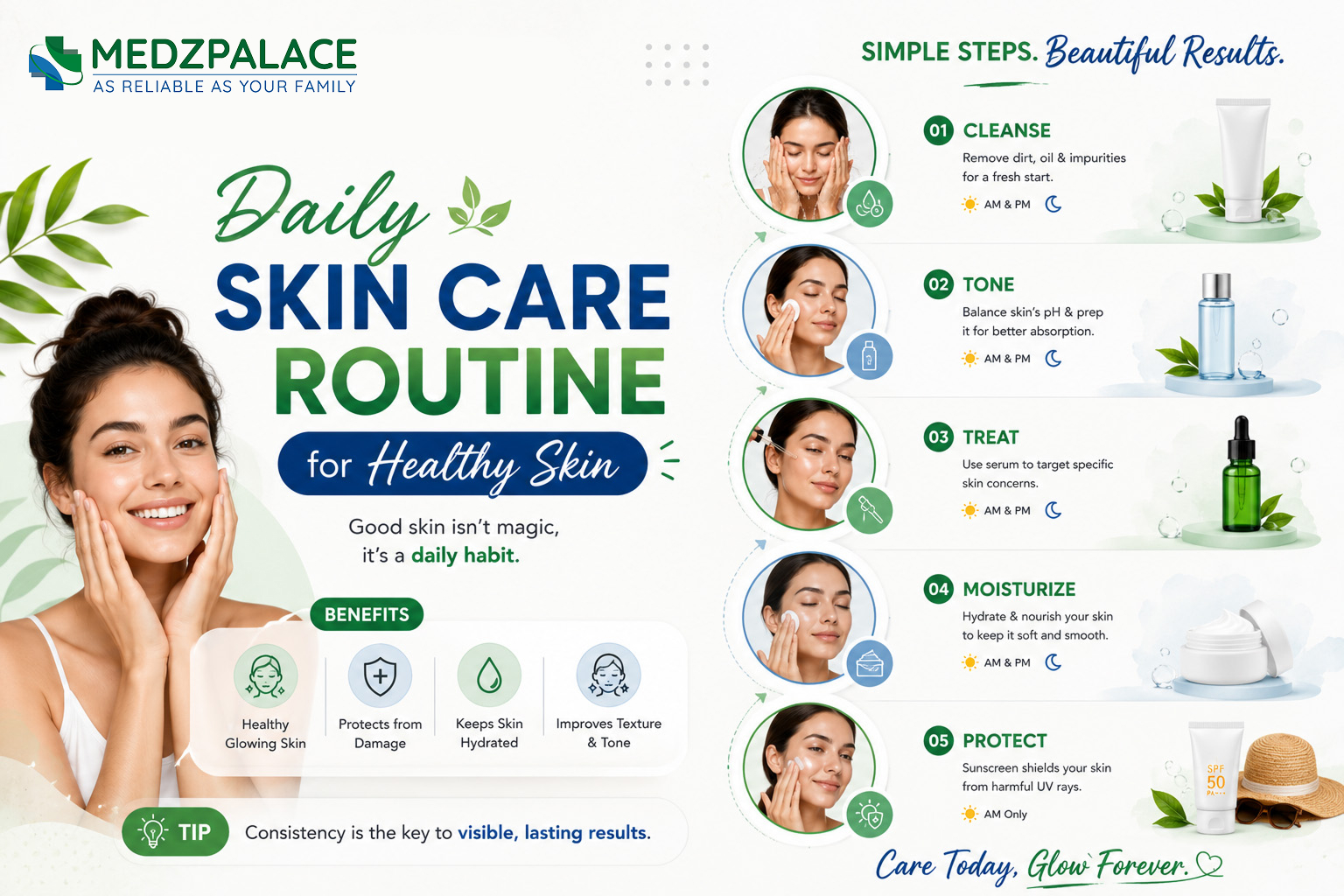
A consistent, well-formulated daily skincare routine is the cornerstone of skin health. While often associated with cosmetic goals, the primary purpose of skin care is to maintain the integrity of the skin barrier, our body’s first line of defense against environmental pathogens, irritants, and UV radiation. A scientifically-backed regimen does more than just improve appearance; it supports the skin’s fundamental biological functions. This guide provides a clinical, evidence-based framework for constructing a daily routine that promotes long-term skin health and addresses common dermatological concerns.
Understanding Your Skin: The Foundation of Effective Care
Before selecting products, it is imperative to understand the unique characteristics of your skin. The efficacy of any routine is entirely dependent on its suitability for your specific skin type and concerns. Skin type is primarily determined by genetics, but it can be influenced by hormones, climate, and lifestyle factors.
Identifying Your Skin Type
There are five primary classifications of skin types, each with distinct characteristics and needs. A simple method to determine your type is the “wash and wait” test: cleanse your face with a gentle cleanser, pat it dry, and wait for 30-60 minutes without applying any products. Observe how your skin looks and feels.
- Normal Skin: Characterized by a healthy balance of sebum (oil) and moisture. Pores are not prominent, the texture is smooth, and the skin is not prone to sensitivity or blemishes. After the test, the skin feels comfortable and balanced.
- Oily Skin: Caused by overactive sebaceous glands producing excess sebum. This leads to a shiny or greasy appearance, enlarged pores, and a higher propensity for comedones (blackheads and whiteheads) and acne. After the test, the face will appear shiny all over.
- Dry Skin: Lacks adequate sebum and lipids, leading to a compromised skin barrier. It often feels tight, looks dull, and may exhibit flaking, scaling, or fine lines. It is more susceptible to irritation. After the test, the skin feels tight, stretched, or even itchy.
- Combination Skin: The most common type, featuring characteristics of both oily and dry skin. Typically, the T-zone (forehead, nose, and chin) is oily, while the cheeks and periorbital area are normal or dry. After the test, the T-zone will be shiny, but the cheeks will feel tight.
- Sensitive Skin: This is more of a condition than a type, but it is a critical consideration. Sensitive skin is hyper-reactive to certain ingredients or environmental factors, resulting in redness, stinging, burning, or itching. It often coexists with conditions like rosacea or eczema.
The Core Four: A Non-Negotiable Daily Routine
Regardless of skin type, a daily routine should be built around four fundamental pillars: cleansing, treating, moisturizing, and protecting. These steps form the basis of both morning and evening regimens, with slight modifications for each.
Morning Routine (AM)
The goal of the morning routine is to protect the skin from oxidative stress generated by UV rays, pollution, and other environmental aggressors encountered throughout the day.
Step 1: Cleanse
Cleansing in the morning removes sweat, sebum, and dead skin cells that have accumulated overnight. A gentle, hydrating, non-stripping cleanser is sufficient. For dry or sensitive skin, a simple rinse with lukewarm water may even be adequate. The goal is a clean canvas, not a “squeaky clean” feeling, which indicates the skin’s lipid barrier has been compromised.
Step 2: Treat (Antioxidant Serum)
Antioxidants are crucial for neutralizing free radicals—unstable molecules that damage cells and accelerate aging. The gold standard topical antioxidant is Vitamin C (specifically L-ascorbic acid). Its benefits are threefold:
- Photoprotection: It enhances the protective effect of sunscreen by neutralizing free radicals that bypass sun filters.
- Collagen Synthesis: It is an essential cofactor in the production of collagen, promoting skin firmness and elasticity.
- Hyperpigmentation Reduction: It inhibits tyrosinase, the enzyme responsible for melanin production, helping to fade dark spots and brighten the complexion.
Apply a few drops of a well-formulated Vitamin C serum to dry skin after cleansing.
Step 3: Moisturize
A moisturizer’s primary function is to hydrate the skin and support the stratum corneum (the outermost layer of the epidermis). It does this by providing humectants (which attract water, like hyaluronic acid and glycerin) and emollients/occlusives (which seal in moisture, like ceramides, squalane, and dimethicone). For daytime, a lighter, lotion-based moisturizer is often preferred to sit well under sunscreen and makeup.
Step 4: Protect (Sunscreen)
This is arguably the most critical step in any skincare routine for preventing photoaging and skin cancer. Daily, consistent use of a broad-spectrum sunscreen with an SPF of 30 or higher is non-negotiable. “Broad-spectrum” ensures protection against both UVA (aging) and UVB (burning) rays.
- Mineral (Physical) Sunscreens: Contain active ingredients like zinc oxide and titanium dioxide. They sit on top of the skin and physically block or reflect UV rays. They are generally better tolerated by sensitive skin.
- Chemical Sunscreens: Contain organic compounds like avobenzone, oxybenzone, and octinoxate. They absorb UV radiation and convert it into heat, which is then released from the skin. They are often more cosmetically elegant and sheer.
Apply generously to the face, neck, and chest as the final step of your routine, 15-20 minutes before sun exposure. Reapplication every two hours is essential when outdoors.
Evening Routine (PM)
The evening routine focuses on cleansing the day away and repairing and regenerating the skin while you sleep.
Step 1: Double Cleanse
A double cleanse is highly recommended in the evening to effectively remove makeup, sunscreen, sebum, and pollutants.
- First Cleanse (Oil-Based): Use a cleansing oil or balm. Oil dissolves oil, making it highly effective at breaking down oil-based products like sunscreen and foundation without stripping the skin.
- Second Cleanse (Water-Based): Follow with your regular gentle cleanser to wash away the emulsified oil and any remaining impurities, thoroughly cleaning the skin itself.
Step 2: Treat (Targeted Actives)
Nighttime is the ideal opportunity to use potent, targeted active ingredients that work to repair cellular damage, increase cell turnover, and address specific concerns. It’s crucial not to use too many actives at once; rotation is key.
- Retinoids (Vitamin A Derivatives): This class of ingredients, including retinol (over-the-counter) and tretinoin (prescription), is the most well-researched for anti-aging. They bind to retinoic acid receptors in the skin, increasing keratinocyte proliferation, normalizing cell turnover, stimulating collagen production, and reducing hyperpigmentation. Usage: Start with a low concentration 2-3 nights a week and gradually increase as tolerated to mitigate irritation, a process known as retinization.
- Exfoliating Acids (AHAs & BHAs): These chemical exfoliants dissolve the bonds holding dead skin cells to the surface, revealing brighter, smoother skin.
- Alpha-Hydroxy Acids (AHAs): Such as glycolic and lactic acid, are water-soluble and work on the skin’s surface. They are excellent for improving texture, fading hyperpigmentation, and boosting hydration.
- Beta-Hydroxy Acid (BHA): Salicylic acid is oil-soluble, allowing it to penetrate into pores to exfoliate the lining and dissolve sebum. This makes it ideal for oily and acne-prone skin.
Usage: Use 1-3 times per week on nights you are not using a retinoid to avoid over-exfoliation and barrier damage.
Step 3: Moisturize
An evening moisturizer is essential to lock in your treatment products and support the skin’s natural overnight repair process (transepidermal water loss is highest at night). A richer, more occlusive cream than your daytime moisturizer is often beneficial, especially if using potentially drying actives like retinoids. Look for ingredients like ceramides, which are lipids that are critical components of the skin barrier.
Customizing Your Routine: Beyond the Basics
Once the core routine is established, you can incorporate additional steps to target specific concerns.
Adding Serums, Essences, and Boosters
These are concentrated, lightweight formulas designed to deliver a high dose of a specific active ingredient. They are typically applied after cleansing/toning and before moisturizing. Examples include:
- Hyaluronic Acid Serum: A powerful humectant for an extra layer of hydration.
- Niacinamide (Vitamin B3) Serum: A versatile ingredient that can help regulate oil production, reduce redness, improve barrier function, and minimize pore appearance.
- Peptide Serum: Peptides are short chains of amino acids that act as signaling molecules, with different types targeting concerns from collagen loss to expression lines.
The Role of Eye Creams
The skin around the eyes (periorbital skin) is the thinnest on the body, making it more susceptible to fine lines and dehydration. While not strictly necessary (a good facial moisturizer can suffice), eye creams are specifically formulated for this delicate area, often with lower concentrations of actives to prevent irritation. They can also contain ingredients like caffeine to temporarily reduce puffiness or Vitamin K for dark circles.
Lifestyle Factors: Skin Health from the Inside Out
Topical care is only one piece of the puzzle. Optimal skin health is significantly impacted by internal and environmental factors.
- Diet: A diet rich in antioxidants (fruits, vegetables), healthy fats (avocados, nuts), and lean protein supports skin structure. Conversely, high-glycemic-index foods and dairy have been linked to an increase in acne severity in some individuals.
- Hydration: Adequate water intake is essential for maintaining skin turgor and function.
- Sleep: During sleep, the body undergoes repair processes, including skin cell regeneration and collagen production. Chronic sleep deprivation is linked to increased signs of aging and impaired barrier function.
- Stress: High levels of cortisol, the stress hormone, can trigger inflammation, exacerbate conditions like acne and eczema, and break down collagen.
Frequently Asked Questions (FAQs)
In what order should I apply my skincare products?
The general rule of thumb is to apply products from the thinnest consistency to the thickest. A standard order would be: Cleanser -> Toner/Essence (if used) -> Treatment Serums (actives) -> Eye Cream -> Moisturizer -> Sunscreen (in the AM) or Face Oil (in the PM).
How long does it take to see results from a new routine?
Patience and consistency are critical. The full skin cell turnover cycle (epidermal turnover time) is approximately 28 days in young adults and slows with age. For most active ingredients, you should wait at least 6-8 weeks to assess efficacy. For retinoids, significant results can take 3-6 months.
Can I mix active ingredients like Vitamin C, Retinol, and AHAs/BHAs?
It is generally not recommended to use these ingredients in the same application. Vitamin C (L-ascorbic acid) is most stable at a low pH, while retinoids work best at a more neutral pH. Using them together can destabilize them and increase the risk of irritation. A common, effective strategy is to use Vitamin C in the morning and alternate retinoids and exfoliating acids in the evening.
Do I still need sunscreen on a cloudy day or if I am indoors?
Yes. Up to 80% of UVB rays can penetrate cloud cover. More importantly, UVA rays, which are responsible for the majority of photoaging, can penetrate both clouds and glass windows. Therefore, daily sunscreen application is necessary regardless of the weather or if you are spending the day inside near windows.
Medical Disclaimer
The information provided in this article is for educational and informational purposes only and is not intended as medical advice. The content is not a substitute for professional medical advice, diagnosis, or treatment. Always seek the advice of a qualified healthcare provider, such as a board-certified dermatologist, with any questions you may have regarding a medical condition or treatment plan. Never disregard professional medical advice or delay in seeking it because of something you have read in this article.