
Sorry, nothing in cart.
Erectile Dysfunction: Causes, Symptoms, Diagnosis, and Treatment Options
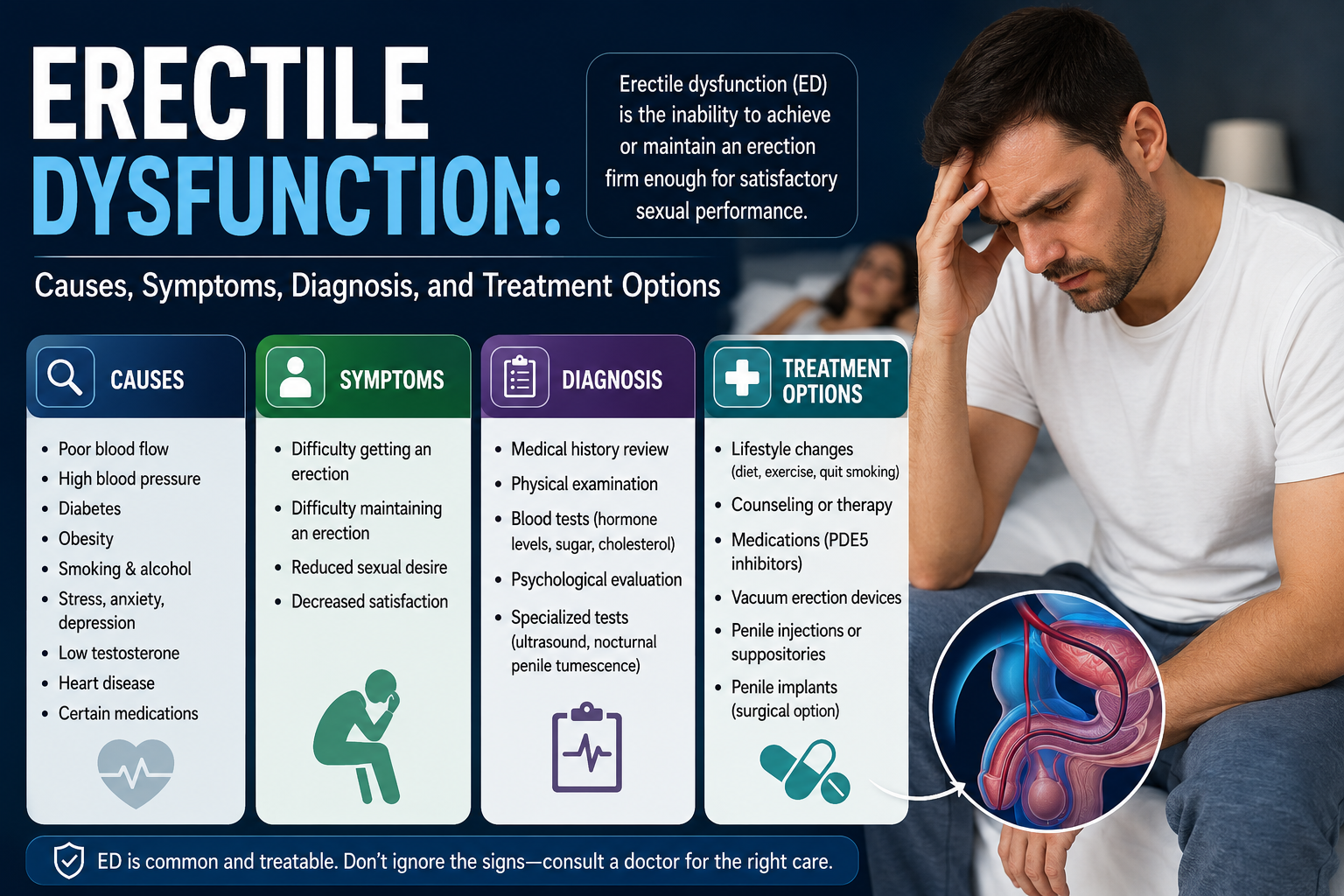
Erectile dysfunction (ED), the inability to achieve or maintain an erection sufficient for satisfactory sexual performance, is a common medical condition that affects millions of men worldwide. While often associated with aging, it is not an inevitable consequence of getting older and can affect men at various stages of life. Understanding ED is the first step toward seeking effective treatment. It is a complex issue with a wide range of potential physical, psychological, and lifestyle-related causes. Fortunately, significant advancements in medical science have led to a variety of effective diagnostic and treatment strategies, empowering men to regain their sexual health and confidence.
Understanding the Mechanics of an Erection
To grasp the causes of erectile dysfunction, it’s essential to first understand the complex physiological process behind a normal erection. An erection is not a simple event but a sophisticated interplay between the brain, nerves, hormones, and the vascular system.
The Neurovascular Process
The process begins with sexual arousal, which can be triggered by physical touch or psychological stimuli. These signals originate in the brain and travel down the spinal cord to the nerves in the pelvic region. These nerves release chemical messengers, most notably nitric oxide (NO).
Nitric oxide plays a crucial role by signaling the smooth muscles of the corpora cavernosa—two sponge-like chambers of erectile tissue that run along the length of the penis—to relax. This relaxation allows arteries in the penis to widen significantly, causing a rapid influx of blood to fill the corpora cavernosa. As these chambers engorge with blood, they expand and press against the veins that normally drain blood from the penis, effectively trapping the blood and causing the penis to become firm and erect. The erection is sustained as long as the arousal signals continue and the blood remains trapped. When arousal ceases, the process reverses, the smooth muscles contract, and blood flows out of the penis, returning it to a flaccid state.
The Multifaceted Causes of Erectile Dysfunction
Erectile dysfunction occurs when there is a disruption at any point in this intricate process. The causes are broadly categorized into physical (organic), psychological, and lifestyle-related factors, and it’s common for multiple factors to be involved.
Physical and Organic Causes
These are the most common causes of ED, particularly in older men. They involve conditions that affect blood vessels, nerves, hormones, or the physical structure of the penis.
- Vascular Diseases: Conditions that affect blood flow are the leading cause of ED. Atherosclerosis (hardening of the arteries), high blood pressure (hypertension), and high cholesterol can damage and narrow the blood vessels throughout the body, including those supplying the penis. When blood flow is restricted, it becomes difficult to achieve a firm erection. In fact, ED is often considered an early warning sign of underlying cardiovascular disease.
- Neurological Disorders: Since erections rely on nerve signals from the brain, conditions that damage the nervous system can interfere with this communication. These include multiple sclerosis (MS), Parkinson’s disease, Alzheimer’s disease, stroke, and spinal cord injuries. Nerve damage resulting from pelvic surgeries (such as radical prostatectomy for prostate cancer) or radiation therapy can also cause ED.
- Diabetes Mellitus: Diabetes is a major risk factor for ED. Over time, high blood sugar levels can damage both the small blood vessels (microvascular damage) and the nerves (neuropathy) that are critical for achieving an erection.
- Hormonal Imbalances: While less common, hormonal issues can contribute to ED. Low levels of testosterone (hypogonadism) can reduce libido (sex drive) and may impact erectile function. Other hormonal conditions, such as an overactive or underactive thyroid gland (hyperthyroidism/hypothyroidism) or problems with the pituitary gland, can also play a role.
- Anatomical Conditions: Peyronie’s disease, a condition where fibrous scar tissue (plaque) forms inside the penis, can cause painful, curved erections and may lead to ED.
- Medication Side Effects: A wide range of prescription and over-the-counter medications can have ED as a side effect. These include certain classes of:
- Antihypertensives (especially beta-blockers and diuretics)
- Antidepressants (particularly SSRIs)
- Antihistamines
- Opioid pain relievers
- Hormone-modulating drugs used to treat prostate cancer
Psychological Causes
The mind plays a powerful role in sexual arousal. Emotional and psychological factors can initiate or exacerbate ED, and are more commonly the primary cause in younger men.
- Stress, Anxiety, and Depression: These are among the most significant psychological contributors. Everyday stress, work pressures, or financial worries can inhibit sexual arousal. Performance anxiety—the fear of not being able to achieve or maintain an erection—can create a self-perpetuating cycle where an initial episode of ED leads to increased anxiety, which in turn causes further erectile difficulties.
- Relationship Issues: Problems with a partner, poor communication, unresolved conflicts, or a lack of emotional intimacy can all contribute to sexual dysfunction.
- Guilt and Low Self-Esteem: Feelings of guilt about sexual performance or low self-worth can negatively impact a man’s ability to become erect.
Lifestyle and Risk Factors
Certain lifestyle choices can significantly increase the risk of developing ED, often because they contribute to underlying vascular and health problems.
- Smoking: Tobacco use damages blood vessels and impairs circulation, directly affecting blood flow to the penis.
- Excessive Alcohol Consumption: While a small amount of alcohol may lower inhibitions, heavy or chronic drinking can depress the central nervous system, interfere with nerve function, and disrupt hormone levels.
- Illicit Drug Use: Substances like marijuana, cocaine, and amphetamines can affect sexual function.
- Obesity and Sedentary Lifestyle: Being overweight increases the risk of developing vascular disease and diabetes, both primary causes of ED. Lack of physical activity contributes to poor cardiovascular health.
Symptoms and When to Seek Help
The primary symptoms of erectile dysfunction are clear and consistent:
- Persistent difficulty getting an erection.
- Difficulty maintaining an erection long enough for sexual intercourse.
- A noticeable reduction in sexual desire (libido).
It is normal for men to experience occasional erection difficulties, especially during times of stress or fatigue. However, if the problem becomes persistent—occurring more than 50% of the time—and causes personal or relationship distress, it is time to consult a healthcare professional.
The Diagnostic Process
A thorough diagnosis is crucial to identify the underlying cause of ED and determine the most appropriate treatment plan. The process typically involves several steps.
Medical and Sexual History
A doctor will begin with a confidential and detailed conversation. Questions may cover the specific nature of the erectile problem (onset, duration, frequency), sexual history, lifestyle habits (diet, exercise, smoking), current medications, and any existing medical conditions.
Physical Examination
A physical exam helps identify potential underlying issues. The doctor will check blood pressure, listen to the heart and lungs, and examine the penis and testicles for any abnormalities. A neurological exam may also be performed to assess nerve sensation.
Laboratory Testing
Blood tests are often ordered to screen for conditions that contribute to ED. These may include:
- Complete Blood Count (CBC)
- Lipid Panel to check cholesterol levels.
- Blood Glucose and HbA1c to test for diabetes.
- Hormone Profile, including total and free testosterone, and thyroid function tests.
Advanced Diagnostic Tests
In some cases, more specialized tests may be needed to pinpoint the cause:
- Nocturnal Penile Tumescence (NPT) Test: This test helps differentiate between physical and psychological causes. Healthy men typically have several erections during sleep. This test, often done at home, uses a device to monitor these nocturnal erections. If a man has erections during sleep but not during waking attempts at sexual activity, the cause is more likely psychological.
- Penile Duplex Ultrasound: This imaging test uses sound waves to evaluate blood flow within the penis. It can identify vascular problems like arterial insufficiency (poor inflow) or venous leak (inability to trap blood).
Comprehensive Treatment Options for ED
Treatment for ED is highly individualized and depends on the underlying cause. The approach often follows a tiered strategy, starting with the least invasive options.
First-Line Treatments: Lifestyle Changes and Oral Medications
Lifestyle Modifications
For many men, making healthy lifestyle changes can significantly improve or even resolve ED. These are foundational to any treatment plan.
- Diet: Adopting a heart-healthy diet, such as the Mediterranean diet, which is rich in fruits, vegetables, whole grains, and healthy fats, can improve vascular health.
- Exercise: Regular aerobic exercise (e.g., brisk walking, swimming, cycling) improves cardiovascular function, helps with weight management, and reduces stress.
- Quit Smoking and Reduce Alcohol: These changes can have a direct positive impact on vascular health and erectile function.
Oral Medications (PDE5 Inhibitors)
These drugs are the most common and effective medical treatment for ED. They work by enhancing the effects of nitric oxide, relaxing the penile muscles and increasing blood flow. They require sexual stimulation to be effective.
- Sildenafil (Viagra®): Typically taken 30-60 minutes before sexual activity.
- Tadalafil (Cialis®): Known for its longer duration of action (up to 36 hours). It is also available in a lower daily dose.
- Vardenafil (Levitra®, Staxyn®): Similar in action to sildenafil.
- Avanafil (Stendra®): A newer option with a faster onset of action.
Important: PDE5 inhibitors are contraindicated for men taking nitrate medications (often prescribed for chest pain), as the combination can cause a dangerous drop in blood pressure.
Second-Line Treatments
When oral medications are ineffective or contraindicated, other options are available.
- Penile Self-Injections (Intracavernosal Injection Therapy): This involves using a very fine needle to inject a medication (like Alprostadil) directly into the base of the penis. The medication causes the blood vessels to dilate, producing an erection within 5-15 minutes that is not dependent on sexual arousal.
- Intraurethral Suppository (MUSE®): A tiny medicated pellet (Alprostadil) is inserted into the urethra using a disposable applicator. It is absorbed into the erectile tissues, leading to an erection.
- Vacuum Erection Device (VED): A VED is a mechanical, non-invasive option. It consists of a plastic cylinder placed over the penis, a pump (manual or battery-powered) to create a vacuum that draws blood into the penis, and a constriction ring that is placed at the base of the penis to maintain the erection after the cylinder is removed.
- Testosterone Replacement Therapy (TRT): For men diagnosed with hypogonadism (clinically low testosterone), TRT can improve libido and may help with erectile function, often in combination with PDE5 inhibitors.
Third-Line Treatment: Surgical Intervention
Penile Implants (Prostheses)
For men who do not respond to other treatments, a penile implant is a highly effective and permanent solution. This surgical procedure involves placing a device entirely inside the body. The two main types are:
- Inflatable Implants: The most common type. They consist of two cylinders placed in the penis, a fluid-filled reservoir in the abdomen, and a pump in the scrotum. Squeezing the pump moves fluid into the cylinders, creating a rigid erection.
- Malleable (Semi-Rigid) Implants: These consist of two flexible rods that keep the penis in a semi-rigid state at all times, which can be easily bent into an erect or concealed position.
Frequently Asked Questions (FAQs)
- Is ED a normal part of getting older?
- No. While the risk of ED increases with age due to the higher prevalence of associated health conditions like vascular disease and diabetes, it is not an inevitable consequence of aging. Healthy men can remain sexually active well into their senior years.
- Can erectile dysfunction be cured?
- Whether ED can be “cured” depends on the cause. If it’s caused by lifestyle factors, making changes like losing weight or quitting smoking can sometimes reverse it. If it’s caused by psychological factors, therapy can resolve it. For most physical causes, ED is a manageable condition rather than a curable one, but modern treatments are highly effective at restoring function.
- How is ED related to heart disease?
- ED, especially in younger men, is often an early warning sign of underlying cardiovascular disease. The arteries in the penis are smaller than those in the heart, so they are often the first to show signs of damage from atherosclerosis. Experiencing ED can be a crucial prompt to get a full cardiovascular check-up.
- Are over-the-counter ED supplements safe or effective?
- Most supplements sold online or in stores for ED are not regulated by the FDA. They can be ineffective at best and dangerous at worst, sometimes containing undisclosed prescription drug ingredients in unsafe doses. It is crucial to only use treatments prescribed by a qualified healthcare professional.
Conclusion
Erectile dysfunction is a common, treatable medical condition, not a personal failing or an unavoidable part of aging. Its causes are diverse, spanning physical health, psychological well-being, and lifestyle choices. The strong link between ED and other serious health issues, particularly cardiovascular disease, underscores the importance of a thorough medical evaluation. With a wide array of effective treatments available—from lifestyle changes and oral medications to advanced therapies and surgical options—men have more power than ever to manage their condition, restore sexual function, and improve their overall health and quality of life.
Medical Disclaimer: The information provided in this article is for educational and informational purposes only and is not intended as medical advice. It is not a substitute for professional medical advice, diagnosis, or treatment. Always seek the advice of your physician or other qualified health provider with any questions you may have regarding a medical condition. Never disregard professional medical advice or delay in seeking it because of something you have read in this article.