
Sorry, nothing in cart.
Fenbendazole Explained: How It Works, Common Uses, Dosage, and Precautions
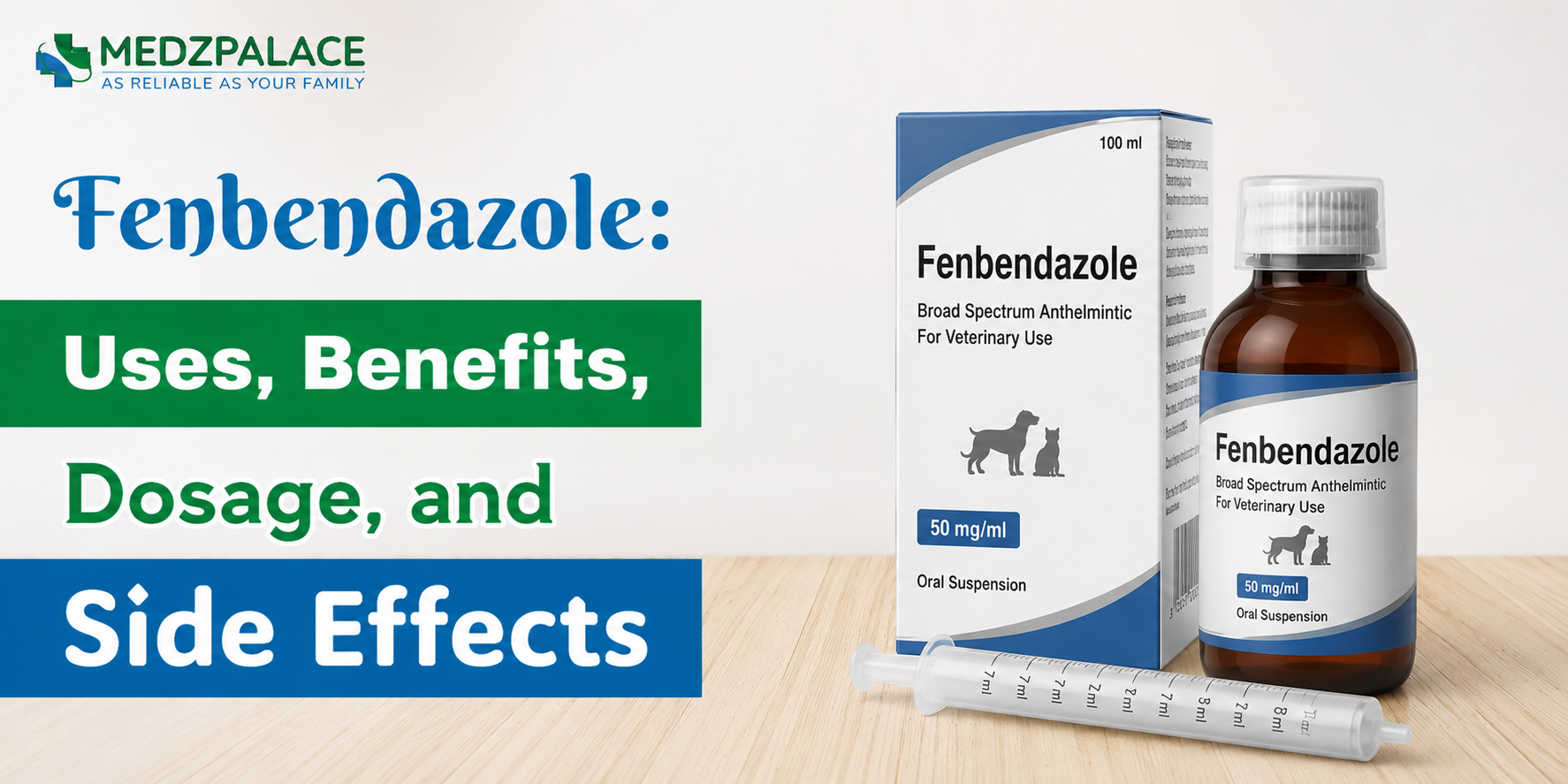
Fenbendazole is a highly effective, broad-spectrum anthelmintic (dewormer) belonging to the benzimidazole class of medications. Widely used in veterinary medicine for decades, it is trusted by professionals to treat and control a vast range of internal parasites in dogs, cats, livestock, and exotic animals. Its efficacy, combined with a remarkable safety profile in target species, has made it a cornerstone of parasite control programs worldwide. This article provides a comprehensive clinical overview of fenbendazole, detailing its mechanism of action, primary uses, standard dosage guidelines, and essential safety precautions.
How Fenbendazole Works: The Mechanism of Action
The success of fenbendazole lies in its ability to selectively target parasitic cells while leaving the host’s cells largely unharmed. This selective toxicity is achieved through a specific biochemical interaction that is critical for the parasite’s survival but less so for the host animal.
Targeting the Parasite’s Cytoskeleton
The primary mechanism of action for fenbendazole involves the disruption of microtubules within the parasite’s cells. Microtubules are essential structural components of the cytoskeleton, responsible for maintaining cell shape, enabling cell division, and facilitating intracellular transport. They are formed by the polymerization of protein subunits called tubulin.
Fenbendazole exhibits a high binding affinity for β-tubulin, a key component of the microtubule structure in invertebrates like helminths (parasitic worms) and certain protozoa (like Giardia). By binding to this protein, fenbendazole effectively inhibits the polymerization process, preventing the formation of new, functional microtubules. Furthermore, it promotes the depolymerization of existing microtubules, leading to a complete collapse of the parasite’s cellular infrastructure.
Inhibiting Microtubule-Dependent Processes
The breakdown of the microtubule network has catastrophic consequences for the parasite. Several vital cellular functions are immediately compromised:
- Impaired Glucose Uptake: Intestinal parasites rely on the efficient absorption of glucose from the host’s gut for energy. This process is dependent on microtubule-mediated transport. By disrupting this system, fenbendazole effectively starves the parasite of its primary energy source.
- Inhibition of Waste Excretion: The drug also interferes with the transport and secretion of waste products from the parasite’s cells, leading to a toxic intracellular accumulation.
- Disruption of Cell Division: Microtubules form the mitotic spindle, which is essential for chromosome segregation during cell division (mitosis). Fenbendazole’s interference with this process halts the parasite’s ability to reproduce and repair tissues.
This multi-pronged attack on the parasite’s cellular metabolism and structure leads to a slow but certain death, with the parasite eventually being expelled from the host’s body.
Selective Toxicity
A crucial aspect of fenbendazole’s safety is its selective toxicity. While mammals also have tubulin, the binding affinity of fenbendazole for mammalian tubulin is significantly lower than for parasitic tubulin. This difference means that at therapeutic doses, the drug effectively targets the parasites without significantly impacting the host animal’s cells, making it a safe option for a wide range of species.
Common Veterinary Uses of Fenbendazole
Fenbendazole’s broad-spectrum activity makes it an invaluable tool for treating infections caused by a wide variety of gastrointestinal and respiratory nematodes, as well as some cestodes and protozoa.
Canine and Feline Parasites
In companion animals, fenbendazole is a go-to medication for routine deworming and treating specific parasitic infections. It is effective against:
- Roundworms (Ascarids): Toxocara canis, Toxocara cati, and Toxascaris leonina.
- Hookworms: Ancylostoma caninum, Ancylostoma tubaeforme, and Uncinaria stenocephala.
- Whipworms: Trichuris vulpis (primarily in dogs).
- Tapeworms: Effective against Taenia species, but not the common flea tapeworm, Dipylidium caninum, which requires treatment with praziquantel.
- Lungworms: Such as Aelurostrongylus abstrusus in cats and Filaroides hirthi in dogs.
- Giardia: While an off-label use, fenbendazole is commonly and effectively used by veterinarians to treat giardiasis, a protozoan infection that causes diarrhea.
Livestock and Large Animals
In production animals like cattle, sheep, goats, and swine, as well as in horses, fenbendazole is critical for maintaining herd health and productivity by controlling parasitic loads.
- Cattle, Sheep, and Goats: It is used to treat infections from stomach worms (e.g., Haemonchus, Ostertagia, Trichostrongylus), intestinal worms (e.g., Cooperia, Nematodirus), and lungworms (Dictyocaulus viviparus).
- Horses: It is effective against large strongyles, small strongyles (cyathostomes), pinworms, and ascarids. A specific, higher-dose “power pack” protocol is sometimes used to target encysted small strongyles.
Exotic Animals and Wildlife
Veterinarians also use fenbendazole to treat parasites in a wide array of other species, including reptiles, birds, and small mammals like rabbits and ferrets. However, dosing in these species requires specialized knowledge, as their metabolisms can differ significantly. Use in these animals should only be under the strict guidance of a veterinarian with experience in exotic animal medicine.
A Note on Off-Label Human Use
In recent years, fenbendazole has gained attention online for its purported anti-cancer properties in humans. This interest stems from preclinical studies (cell cultures and animal models) suggesting that its microtubule-disrupting mechanism could potentially inhibit the growth of cancer cells, which rely on rapid cell division.
It is critically important to understand the following:
- Not Approved for Humans: Fenbendazole is not approved by the FDA or any other major regulatory body for human use. The formulations available are designed and dosed for animals, and their purity and excipients have not been tested for human safety.
- Lack of Clinical Evidence: While preclinical research is intriguing, there is a profound lack of robust, large-scale, controlled clinical trials to prove its safety and efficacy as a cancer treatment in humans. Anecdotal reports are not a substitute for scientific evidence.
- Risk of Self-Medication: Self-treating a serious condition like cancer with an unproven, non-human-grade medication can be extremely dangerous. It can lead to unknown side effects, toxicities, and harmful interactions with conventional, proven cancer therapies. Most importantly, it can cause patients to delay or refuse established treatments that have a demonstrated ability to improve outcomes.
Anyone with a cancer diagnosis should speak directly with their oncologist about evidence-based treatment options. The use of fenbendazole for human cancer remains experimental and is not a recommended course of action.
Dosage and Administration
The correct dosage of fenbendazole is paramount for ensuring efficacy and safety. Dosage depends on the target species, the animal’s body weight, and the specific parasite being treated.
General Dosing Principles
Always consult a veterinarian before administering fenbendazole. A proper diagnosis is necessary to confirm the type of parasite and to rule out other medical conditions. The veterinarian will calculate the precise dose based on an accurate, current weight.
Typical Dosing Regimens for Companion Animals
While specific doses vary, some common protocols for dogs and cats include:
- Standard Deworming: The typical dose is 50 mg per kg (22.7 mg per lb) of body weight, administered orally once a day for three consecutive days. This 3-day course is often repeated after 2-3 weeks to target parasites that have newly matured from the larval stage.
- Giardia Treatment: For giardiasis, the same 50 mg/kg dose is often extended for a longer duration, typically 5 to 7 days, as prescribed by a veterinarian.
- Puppies and Kittens: Young animals are often dewormed on a schedule starting from a few weeks of age to control roundworms and hookworms commonly passed from the mother.
Forms of Fenbendazole
Fenbendazole is available in several formulations to facilitate easy administration:
- Granules/Powder: This is a common form (e.g., Panacur®, Safe-Guard®) that can be easily mixed into a small amount of moist food.
- Oral Suspension: A liquid form that can be administered directly into the mouth with a syringe or mixed with food.
- Paste: Often used for horses and other large animals, administered from a calibrated oral syringe.
Precautions, Side Effects, and Safety Profile
Fenbendazole is widely regarded as one of the safest anthelmintics available. It has a high margin of safety, and adverse effects are uncommon when used at the correct dose in approved species.
Potential Side Effects
When side effects do occur, they are generally mild and transient. The most common effects are related to the gastrointestinal tract:
- Vomiting
- Diarrhea or loose stools
- Lethargy
- Loss of appetite
It is important to note that these symptoms can sometimes be a result of the rapid death and breakdown of a large number of parasites within the gut. This “die-off” effect can release substances that cause a temporary inflammatory reaction and gastrointestinal upset.
In rare cases, a hypersensitivity or allergic reaction may occur. Signs include facial swelling, hives, or difficulty breathing, which require immediate veterinary attention.
Contraindications and Warnings
- Hypersensitivity: Fenbendazole should not be used in animals with a known allergy to the drug or other benzimidazole compounds.
- Pregnancy and Lactation: It is generally considered safe for use in pregnant and lactating animals, but this should always be done under the direct supervision of a veterinarian.
- Debilitated Animals: Caution should be exercised when treating severely ill or debilitated animals.
Frequently Asked Questions (FAQs)
Is a prescription required for Fenbendazole?
The requirement for a prescription can vary by country and the specific product formulation. Some lower-concentration, over-the-counter (OTC) versions are available for certain species. However, regardless of availability, it is strongly recommended to use this medication only after a confirmed diagnosis and dosage recommendation from a licensed veterinarian.
How quickly does Fenbendazole work?
Fenbendazole begins working within hours of administration by inhibiting the parasite’s ability to take in nutrients. However, because it works by slowly starving the worms, it takes the full course of treatment (typically 3 days or more) to completely eliminate the infection. You may see dead worms in the stool during or after the treatment period.
Can I give Fenbendazole to a pregnant or nursing pet?
Fenbendazole has been shown to be safe for use in many pregnant and nursing animals and is often used as part of a deworming protocol to prevent parasite transmission to offspring. Despite its safety record, you must consult your veterinarian before administering any medication to a pregnant or nursing animal.
What should I do if my pet vomits after taking Fenbendazole?
If your pet vomits shortly after receiving a dose (e.g., within an hour), the medication may not have been fully absorbed. Contact your veterinarian immediately. Do not re-administer the dose without their specific instructions, as they will advise on whether and when it is safe to do so.
Does Fenbendazole kill all types of worms?
Fenbendazole has a very broad spectrum of activity but does not kill every type of parasite. Its most significant gap in coverage for dogs and cats is the flea tapeworm, Dipylidium caninum. If your pet has fleas, they may also have this type of tapeworm, which requires a different medication called praziquantel for effective treatment.
Medical Disclaimer
The information provided in this article is for educational and informational purposes only and is not intended as a substitute for professional veterinary advice, diagnosis, or treatment. Always seek the advice of your veterinarian or other qualified health provider with any questions you may have regarding a medical condition or the health of your pet. Never disregard professional veterinary advice or delay in seeking it because of something you have read in this article.