
Sorry, nothing in cart.
How Albendazole Helps Treat Parasitic Worm Infections
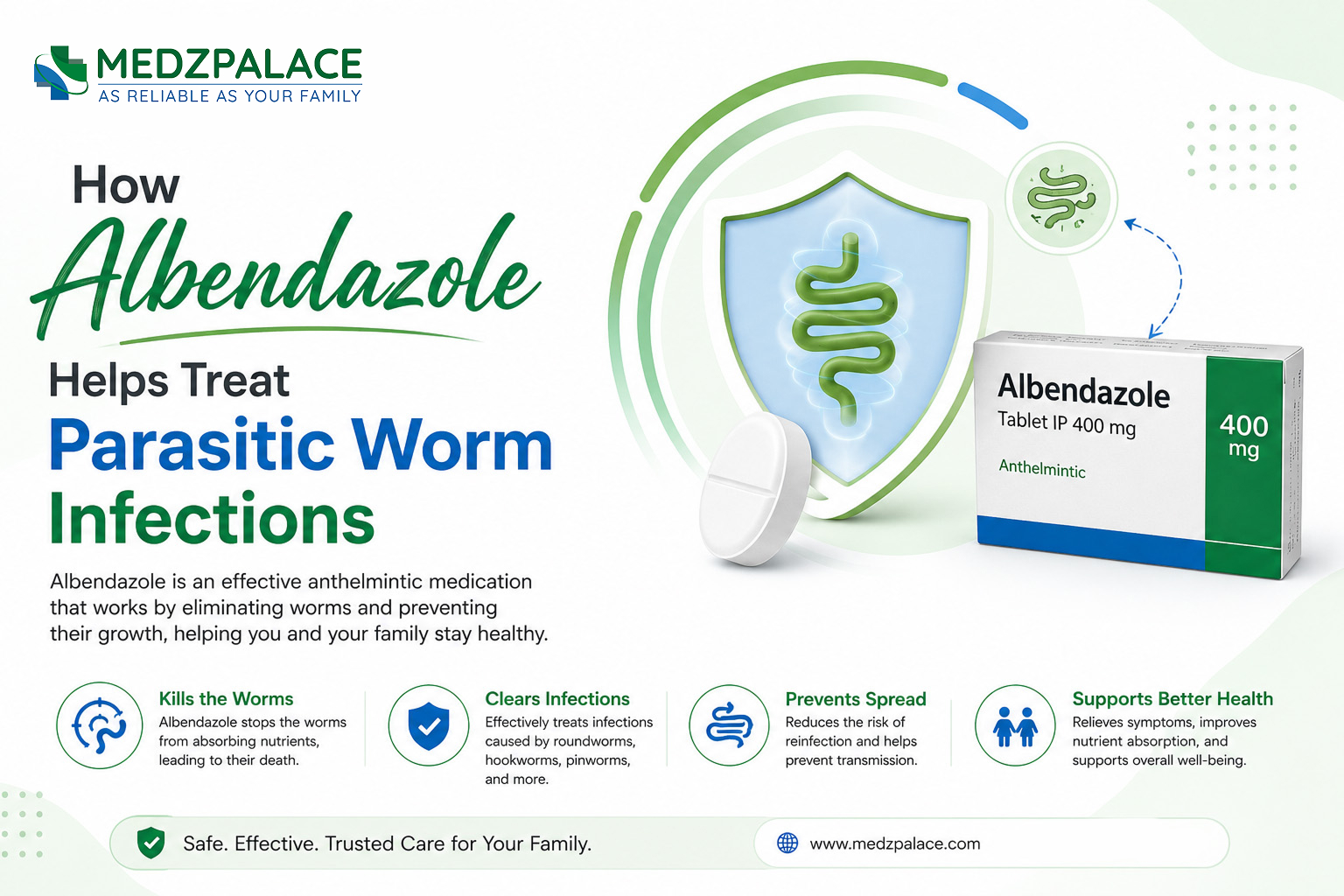
Parasitic worm infections, medically known as helminthiasis, represent a significant global health burden, affecting billions of people, particularly in regions with limited access to clean water and sanitation. These infections can lead to a range of debilitating conditions, from malnutrition and anemia to severe organ damage. At the forefront of the fight against these pervasive parasites is a powerful medication called albendazole. As a broad-spectrum anthelmintic, albendazole is a cornerstone of treatment for a wide variety of intestinal and tissue-dwelling worms. This article provides a comprehensive clinical overview of how albendazole works, its mechanism of action, its applications, and its crucial role in public health.
Understanding the Enemy: A Primer on Parasitic Worms
To appreciate how albendazole functions, it’s essential to first understand the parasites it targets. Helminths are broadly categorized into three main groups, each containing numerous species that can infect humans:
- Nematodes (Roundworms): This is the most common group of helminths infecting humans. It includes well-known parasites like Ascaris lumbricoides (giant roundworm), hookworms (Ancylostoma duodenale and Necator americanus), whipworm (Trichuris trichiura), and pinworm (Enterobius vermicularis).
- Cestodes (Tapeworms): These are segmented flatworms that reside in the intestines. Key examples include the pork tapeworm (Taenia solium), beef tapeworm (Taenia saginata), and the larval stages of the dog tapeworm (Echinococcus granulosus), which cause hydatid disease.
- Trematodes (Flukes): These are leaf-shaped flatworms that can infect various organs. While albendazole has activity against some flukes, other drugs like praziquantel are often the first-line treatment for fluke infections like schistosomiasis.
These parasites are transmitted through various routes, including the ingestion of contaminated food or water, contact with contaminated soil, or through insect vectors. Once inside the human body, they can cause a wide spectrum of diseases, profoundly impacting physical development, cognitive function, and overall quality of life.
The Core Mechanism of Action: How Albendazole Defeats Parasites
Albendazole 400mg belongs to a class of drugs known as benzimidazoles. Its remarkable effectiveness stems from its ability to selectively target and disrupt fundamental biological processes within the parasite, leading to its paralysis and death. The mechanism is multifaceted but centers on one primary action.
Primary Target: Inhibiting Microtubule Formation
The main weapon in albendazole’s arsenal is its ability to interfere with the parasite’s cytoskeleton. The cytoskeleton provides structural support to cells and is vital for processes like cell division, intracellular transport, and nutrient absorption. A key component of this cytoskeleton is a protein called beta-tubulin.
Cells build long, hollow tubes called microtubules by polymerizing (linking together) units of tubulin. These microtubules are constantly being assembled and disassembled, allowing the cell to change shape, move, and transport nutrients.
Here’s how albendazole disrupts this process:
- Binding to Beta-Tubulin: Albendazole and its active metabolite, albendazole sulfoxide, bind with very high affinity to a specific site on the parasite’s beta-tubulin protein.
- Halting Polymerization: This binding acts like a cap, preventing further tubulin units from being added to the growing microtubule chain. It effectively stops the assembly of these critical structures.
- Selective Toxicity: Crucially, albendazole binds far more strongly to helminth beta-tubulin than to mammalian (human) beta-tubulin. This selective toxicity is why the drug is highly effective against the worm while having minimal impact on the host’s cells at therapeutic doses.
The collapse of the microtubular network triggers a cascade of fatal consequences for the parasite.
Secondary Effects: Energy Depletion and Starvation
The disruption of microtubules has immediate and devastating secondary effects, primarily on the parasite’s ability to feed.
- Impaired Glucose Uptake: The intestinal cells of worms are lined with microtubules that are essential for absorbing glucose and other nutrients from the host’s gut. With the microtubule network compromised, the parasite’s ability to absorb its primary energy source is severely diminished.
- Glycogen Depletion: Unable to take in new fuel, the parasite is forced to use up its stored energy reserves, principally glycogen. This leads to a rapid depletion of energy.
- Reduced ATP Production: The lack of glucose and depleted glycogen stores cause a dramatic fall in the production of adenosine triphosphate (ATP), the cell’s main energy currency.
Without ATP, the parasite cannot perform essential life-sustaining functions. It is, in effect, starved from the inside out. This energy crisis leads to immobilization and paralysis, preventing the worm from maintaining its position within the host’s intestine. It eventually loses its grip and is expelled from the body via normal peristalsis.
Ovicidal and Larvicidal Effects
Albendazole’s action is not limited to adult worms. Its active metabolite can also affect the parasite’s reproductive cycle. By interfering with cell division (which relies heavily on microtubules) in the developing eggs, it has an ovicidal effect, meaning it can kill worm eggs. Furthermore, it has larvicidal activity, killing the larval stages of many parasites. This is a critical feature for breaking the cycle of infection and preventing reinfection, especially in community-wide deworming programs.
Pharmacokinetics: Albendazole’s Journey Through the Body
Understanding how the body absorbs, metabolizes, and distributes albendazole is key to its effective clinical use, especially for different types of infections.
Absorption and Metabolism
Albendazole itself is poorly absorbed from the gastrointestinal tract when taken on an empty stomach. However, this characteristic is leveraged depending on the location of the infection.
- For Intestinal Worms: For parasites residing within the gut (like pinworms or roundworms), low systemic absorption is acceptable, as the drug can act directly on the worms locally.
- For Tissue Infections: For systemic infections where the parasite is in the muscles, brain (neurocysticercosis), or liver (hydatid disease), high systemic absorption is critical. To achieve this, albendazole should be taken with a high-fat meal. Fat enhances its absorption by up to five times, allowing the drug to reach therapeutic concentrations in the bloodstream and tissues.
Once absorbed, albendazole is rapidly and extensively metabolized in the liver during its “first pass.” It is converted into its primary active metabolite, albendazole sulfoxide. This metabolite is responsible for most of the drug’s systemic anthelmintic effects.
Distribution and Elimination
Albendazole sulfoxide is well-distributed throughout the body. It can penetrate various tissues, including the cerebrospinal fluid and the fluid inside hydatid cysts, making it an effective treatment for neurological and deep-tissue parasitic diseases. The half-life of this active metabolite is approximately 8.5 hours. It is primarily eliminated from the body through bile and eventually excreted in the feces.
Clinical Applications: The Spectrum of Infections Treated by Albendazole
Thanks to its broad-spectrum activity, albendazole is recommended by the World Health Organization (WHO) and other health bodies for treating a wide range of helminthic infections.
Common Intestinal Nematode Infections
Albendazole is a first-line treatment, often administered as a single 400 mg dose, for the “unholy trinity” of soil-transmitted helminths:
- Ascariasis (Giant Roundworm)
- Trichuriasis (Whipworm)
- Hookworm Infections
It is also highly effective for:
- Enterobiasis (Pinworm): Often requires a second dose after two weeks to prevent reinfection.
- Strongyloidiasis (Threadworm): May require a longer course of treatment.
Systemic and Tissue-Based Infections
For these more complex infections, albendazole is used in higher doses and for prolonged periods, often under specialist supervision.
- Neurocysticercosis: This is a serious infection of the central nervous system caused by the larval cysts of the pork tapeworm, Taenia solium. Albendazole is a mainstay of therapy, used to kill the cysts in the brain. Treatment often includes corticosteroids to manage the inflammatory response caused by the dying parasites.
- Hydatid Disease (Cystic Echinococcosis): Caused by the larval stage of the dog tapeworm, Echinococcus granulosus, which forms large cysts in the liver, lungs, and other organs. Albendazole is used to shrink cysts before surgery, to prevent recurrence after surgery, or as the sole treatment for inoperable cases.
- Toxocariasis: An infection caused by the larvae of dog or cat roundworms (Toxocara canis or T. cati), which can migrate to organs like the liver (visceral larva migrans) or the eye (ocular larva migrans).
- Trichinosis: An infection caused by ingesting undercooked meat containing Trichinella larvae. Albendazole is used to kill the adult worms in the intestine and the larvae that migrate to muscle tissue.
Dosage, Safety, and Important Considerations
While albendazole is generally a safe and well-tolerated drug, its use requires medical guidance.
Side Effects
In single-dose regimens for intestinal worms, side effects are typically mild and transient. They may include:
- Headache
- Nausea or vomiting
- Abdominal pain
- Dizziness
When used for long-term, high-dose therapy for systemic infections, the risk of more significant side effects increases. These require careful monitoring by a healthcare provider and may include:
- Liver Enzyme Elevation: Regular liver function tests are necessary.
- Bone Marrow Suppression: A decrease in white blood cell counts (leukopenia) can occur. Blood counts should be monitored.
- Reversible Alopecia: Hair loss can occur but typically resolves after treatment is stopped.
Contraindications and Precautions
Albendazole is generally contraindicated in individuals with a known hypersensitivity to it or other benzimidazole drugs. The most significant contraindication is pregnancy. Albendazole has been shown to be teratogenic (causing birth defects) in animal studies and should not be used during pregnancy, especially in the first trimester. Women of childbearing potential should have a negative pregnancy test before starting treatment and use effective contraception during and for one month after therapy.
Frequently Asked Questions (FAQs)
How long does it take for albendazole to work?
For intestinal worms, albendazole begins working within hours of ingestion by paralyzing the worms. You may see worms expelled in the stool within 1-3 days. For systemic tissue infections, treatment courses are much longer (weeks to months) to ensure all larvae or cysts are eliminated.
Should I always take albendazole with food?
It depends on the infection. For intestinal worms (e.g., pinworm, roundworm), it can be taken with or without food. However, for tissue infections like neurocysticercosis or hydatid disease, it is essential to take it with a high-fat meal (e.g., with milk, yogurt, or oily food) to maximize its absorption into the bloodstream.
What should I do if I see worms in my stool after taking albendazole?
This is a normal and expected sign that the medication is working. The drug paralyzes and kills the worms, which are then passed out of the body naturally. It can be alarming, but it indicates a successful treatment.
Is albendazole safe for children?
Yes, albendazole is widely and safely used in children over the age of one or two (depending on national guidelines). Dosages are typically adjusted based on weight. It is a key component of school-based mass deworming programs run by the WHO worldwide.
Can I drink alcohol while taking albendazole?
It is generally advisable to avoid alcohol while taking albendazole, especially during long-term treatment courses. Both alcohol and albendazole are metabolized by the liver, and combining them could potentially increase the risk of liver-related side effects.
Medical Disclaimer: This article is for informational and educational purposes only. It is not intended to be a substitute for professional medical advice, diagnosis, or treatment. Always seek the advice of your physician or another qualified health provider with any questions you may have regarding a medical condition. Do not disregard professional medical advice or delay in seeking it because of something you have read in this article. Self-medication can be dangerous.