
Sorry, nothing in cart.
Understanding Erectile Dysfunction: Why It Happens and How to Treat It
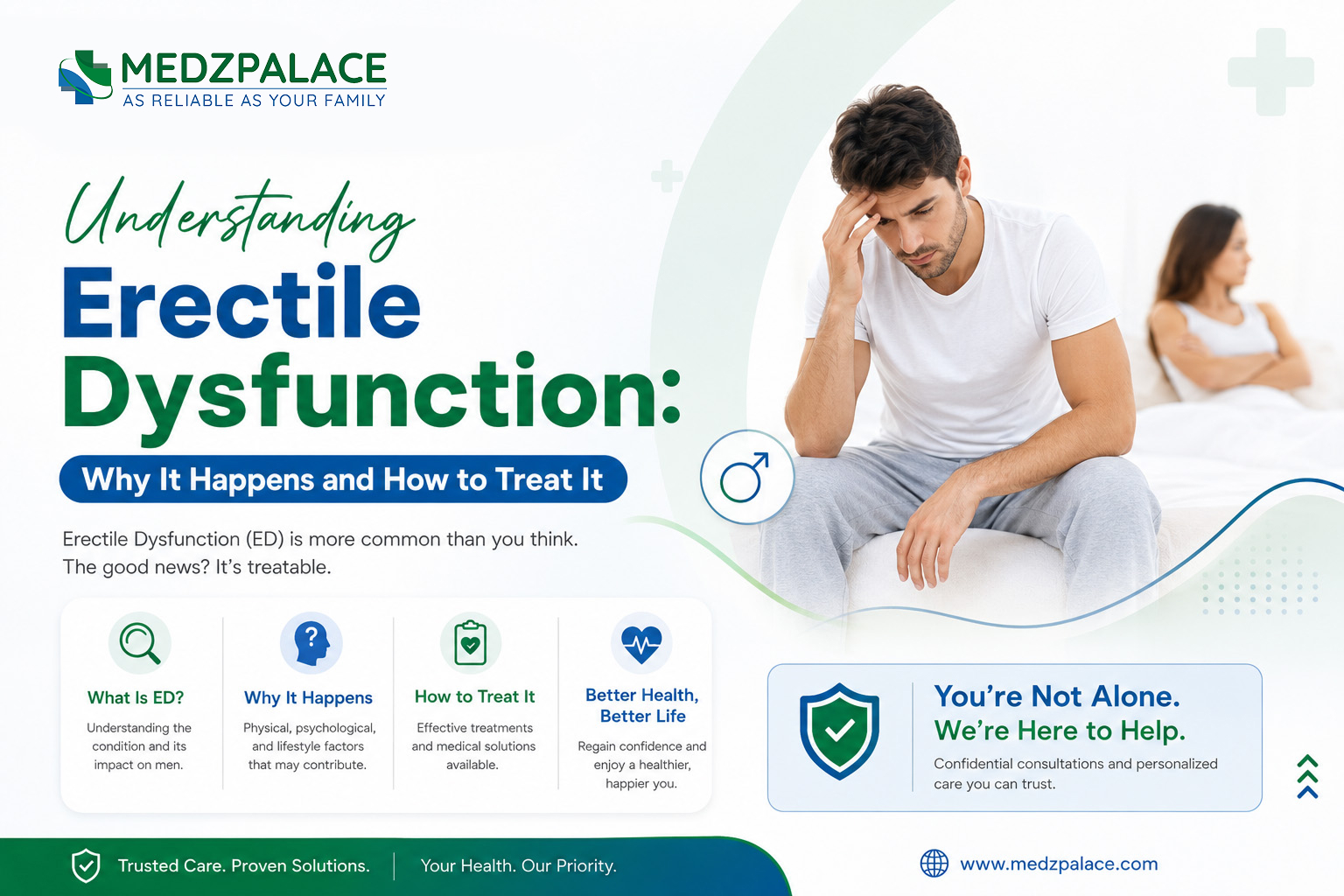
Erectile dysfunction (ED) is a common medical condition that affects millions of men worldwide. Defined as the persistent inability to achieve or maintain an erection sufficient for satisfactory sexual performance, ED can be a source of significant emotional distress, impacting self-esteem, relationships, and overall quality of life. While it becomes more prevalent with age, it is crucial to understand that ED is not an inevitable consequence of getting older. It is a complex medical issue with a wide range of potential causes, many of which are treatable. More importantly, ED can often be an early warning sign of a more serious underlying health problem, such as cardiovascular disease. This comprehensive article will delve into the intricate physiology of an erection, explore the multifaceted causes of dysfunction, and outline the modern diagnostic and treatment pathways available.
The Physiology of an Erection: A Complex Process
To understand why erectile dysfunction occurs, it’s essential first to understand how a normal erection works. An erection is a neurovascular event, meaning it involves a sophisticated interplay between the brain, nerves, hormones, and blood vessels. The process is not merely mechanical; it is initiated by a combination of physical and psychological stimuli.
The key steps include:
- Arousal: Sexual arousal, triggered by thoughts, sights, sounds, or physical touch, causes the brain to send nerve signals down the spinal cord to the penis.
- Nitric Oxide Release: These nerve signals stimulate the release of a chemical messenger called nitric oxide (NO) in the erectile tissues of the penis.
- Muscle Relaxation: Nitric oxide activates an enzyme that leads to the production of cyclic guanosine monophosphate (cGMP). This compound causes the smooth muscles in the arteries of the penis to relax and widen.
- Increased Blood Flow: As the arteries expand, blood rushes into two chambers of spongy tissue within the penis, known as the corpora cavernosa.
- Erection and Trapping: The influx of blood causes the corpora cavernosa to expand, leading to the penis becoming rigid and erect. Simultaneously, the swelling of these chambers compresses the veins that normally drain blood away from the penis, trapping the blood and sustaining the erection.
This entire sequence relies on healthy nerves, responsive blood vessels, and appropriate hormonal levels. A disruption at any point in this cascade can result in erectile dysfunction.
Unraveling the Causes of Erectile Dysfunction
The causes of ED are broadly categorized into physical (organic) and psychological (psychogenic) factors, though in many cases, a combination of both is at play. It’s now understood that approximately 80% of ED cases have a primary physical cause.
Physical and Vascular Causes
Conditions that affect blood flow (vascular system) are the most common physical causes of ED. If the blood vessels are damaged or narrowed, not enough blood can enter the penis to create a firm erection.
- Cardiovascular Disease: Atherosclerosis (hardening of the arteries), high blood pressure (hypertension), and high cholesterol can damage and clog the delicate arteries supplying the penis, restricting blood flow. Often, ED is one of the first signs of underlying heart disease.
- Diabetes Mellitus: Men with diabetes are at a significantly higher risk for ED. High blood sugar levels can damage both the small blood vessels (microvascular damage) and the nerves (neuropathy) responsible for signaling an erection.
- Obesity and Metabolic Syndrome: These conditions are closely linked to vascular disease and diabetes. Excess body fat can also lead to inflammation, lower testosterone levels, and vascular damage.
- Peyronie’s Disease: This condition involves the development of scar tissue (plaque) inside the penis, leading to curved, painful erections and, in many cases, erectile dysfunction.
Neurological Causes
Disorders that interfere with the brain’s ability to send signals to the penis can prevent erections, even if the vascular system is healthy.
- Nerve Damage from Surgery or Radiation: Treatments for prostate or bladder cancer, such as radical prostatectomy and pelvic radiation, can inadvertently damage the nerves essential for erectile function.
- Spinal Cord and Brain Injuries: Trauma to the spinal cord or brain can sever the communication pathways between the brain and the penis.
- Neurological Diseases: Conditions like multiple sclerosis (MS), Parkinson’s disease, and stroke can impair nerve signaling and lead to ED.
Hormonal Imbalances
Hormones, particularly testosterone, play a key role in sexual desire (libido) and contribute to the erectile process. While less common, hormonal issues can be a primary or contributing cause of ED.
- Low Testosterone (Hypogonadism): Testosterone is crucial for male libido. While low levels don’t always directly cause ED, they often reduce sexual interest, which can make achieving an erection more difficult.
- Thyroid Problems: Both an overactive (hyperthyroidism) and underactive (hypothyroidism) thyroid gland can interfere with sexual function.
- Pituitary Gland Conditions: Tumors or other issues with the pituitary gland can affect the production of multiple hormones, including those that regulate testosterone.
Medication-Induced ED
A surprising number of common prescription medications can have erectile dysfunction as a side effect. It is crucial never to stop a prescribed medication without consulting a doctor, but awareness is key.
- Blood Pressure Medications: Particularly diuretics (water pills) and beta-blockers.
- Antidepressants and Anti-Anxiety Drugs: Especially selective serotonin reuptake inhibitors (SSRIs).
- Antihistamines: Certain older-generation antihistamines.
- Hormone-Modulating Drugs: Medications used to treat prostate cancer or benign prostatic hyperplasia (BPH).
- Opioid Painkillers.
Psychological and Emotional Factors
The brain plays a central role in initiating an erection, so psychological factors can have a powerful effect on sexual function. In some cases, a single negative experience can create a cycle of anxiety and failure.
- Stress and Anxiety: Everyday stress, work pressures, or financial worries can inhibit sexual arousal.
- Performance Anxiety: Worrying about the ability to achieve or maintain an erection can become a self-fulfilling prophecy.
- Depression: This common mood disorder profoundly affects all aspects of a person’s life, including libido and sexual function.
- Relationship Problems: Lack of communication, unresolved conflicts, or poor intimacy with a partner can contribute significantly to ED.
Lifestyle and Other Risk Factors
Daily habits and overall health choices have a direct impact on erectile function.
- Smoking: Tobacco use is a major cause of vascular disease, damaging blood vessels throughout the body, including those in the penis.
- Excessive Alcohol Consumption: Chronic heavy drinking can lead to nerve damage, hormonal imbalances, and liver disease, all of which contribute to ED.
- Substance Abuse: Illicit drugs like amphetamines, cocaine, and marijuana can all affect sexual performance.
- Sedentary Lifestyle: Lack of regular physical activity is a significant risk factor for obesity, heart disease, and ED.
The Diagnostic Process: Seeking a Solution
Because ED can signal a more serious health condition, a thorough medical evaluation is essential. A healthcare provider will typically begin with a detailed history and physical exam.
Medical and Sexual History
A doctor will ask questions about the frequency, quality, and duration of erections. They will also inquire about medical history (e.g., heart disease, diabetes), surgeries, medications, and lifestyle factors. This information helps pinpoint potential causes.
Physical Examination
This includes checking blood pressure, listening to the heart and lungs, and examining the penis and testicles for any abnormalities. A digital rectal exam may be performed to assess the prostate gland.
Laboratory Tests
Blood tests are often ordered to check for underlying conditions. These can include:
- Complete Blood Count (CBC)
- Lipid Panel (Cholesterol)
- Blood Glucose and HbA1c (to screen for diabetes)
- Testosterone Levels
- Thyroid Function Tests
A Comprehensive Guide to Treating Erectile Dysfunction
Fortunately, a wide array of effective treatments is available for ED. The approach is often tiered, starting with the least invasive options first.
Lifestyle Modifications: The First Line of Defense
For many men, especially those whose ED is linked to vascular issues or lifestyle choices, making healthy changes can significantly improve or even reverse the condition.
- Exercise: Regular aerobic exercise improves cardiovascular health, blood flow, and mood.
- Healthy Diet: A diet rich in fruits, vegetables, whole grains, and lean proteins (like the Mediterranean diet) can improve vascular health.
- Weight Management: Losing excess weight can improve hormone levels, reduce blood pressure, and increase self-esteem.
- Quitting Smoking: This is one of the most impactful changes a man can make for his vascular and erectile health.
- Limiting Alcohol: Reducing alcohol intake can improve nerve function and hormonal balance.
Oral Medications (PDE5 Inhibitors)
These prescription drugs are the most common first-line medical treatment for ED. They work by blocking the enzyme phosphodiesterase type 5 (PDE5), which breaks down cGMP. By blocking this enzyme, cGMP levels remain higher, which helps relax the smooth muscles and increase blood flow to the penis. Importantly, these drugs do not create an erection spontaneously; sexual stimulation is still required.
- Sildenafil (Viagra®): Typically taken 30-60 minutes before sexual activity.
- Tadalafil (Cialis®): Known for its longer duration of action (up to 36 hours). Also available in a lower daily dose.
- Vardenafil (Levitra®): Similar in action to sildenafil.
- Avanafil (Stendra®): A newer option with a faster onset of action.
Common side effects can include headache, facial flushing, nasal congestion, and indigestion. These medications are contraindicated for men taking nitrate drugs (often prescribed for chest pain), as the combination can cause a dangerous drop in blood pressure.
Other Medical Treatments
When oral medications are ineffective or contraindicated, other options are available.
- Testosterone Replacement Therapy (TRT): This is only appropriate for men with clinically diagnosed low testosterone. It can improve libido and may improve erectile function in these specific cases.
- Penile Self-Injections (Intracavernosal Injection Therapy): This involves using a very fine needle to inject a medication (like Alprostadil) directly into the base of the penis. This induces an erection by directly relaxing the smooth muscles and dilating the arteries.
- Intraurethral Suppositories (MUSE®): A tiny medicated pellet is inserted into the urethra. The medication is absorbed and works similarly to injections, though it is often considered less effective.
Medical Devices
Vacuum Erection Devices (VEDs): A VED consists of a plastic cylinder, a pump (manual or battery-powered), and a constriction ring. The cylinder is placed over the penis, and the pump creates a vacuum that draws blood into the penis, creating an erection. The constriction ring is then slipped onto the base of the penis to maintain the erection. It’s a safe and effective non-drug option.
Surgical Interventions
For men who do not respond to other treatments, surgery may be an option.
- Penile Implants (Prostheses): This is a highly effective and generally well-regarded solution. Malleable (semi-rigid) rods or, more commonly, inflatable devices are surgically placed within the corpora cavernosa. The inflatable devices allow a man to create an erection on demand by activating a small pump hidden in the scrotum.
Psychological Counseling and Sex Therapy
When ED is caused or exacerbated by psychological factors, therapy can be extremely beneficial. A therapist can help address issues like performance anxiety, stress, depression, or relationship conflicts. Cognitive-behavioral therapy (CBT) is often used to break the cycle of negative thinking associated with performance anxiety.
Frequently Asked Questions (FAQs)
Is ED a normal part of aging?
While the incidence of ED increases with age due to a higher likelihood of associated health conditions like vascular disease and diabetes, it is not an inevitable or “normal” part of the aging process. Many older men maintain excellent sexual function. It should always be viewed as a treatable medical condition.
Can I buy ED medication online safely?
You should exercise extreme caution. Many online “pharmacies” sell counterfeit medications that can be ineffective or contain harmful ingredients. The only safe way to obtain these drugs is with a prescription from a licensed healthcare provider and from a reputable, certified pharmacy.
Will supplements or “natural remedies” cure my ED?
The market is flooded with supplements claiming to treat ED, but most lack scientific evidence of their efficacy and safety. Some may even contain undisclosed prescription drug ingredients or harmful substances. Always discuss any supplement use with your doctor before trying it.
Can ED be a sign of a more serious health problem?
Yes, absolutely. For many men, ED is the first noticeable symptom of underlying cardiovascular disease. The arteries in the penis are smaller than those in the heart, so they are often the first to show signs of damage from atherosclerosis. Treating ED is not just about sex; it’s about your overall health.
Medical Disclaimer: The information provided in this article is for educational and informational purposes only and is not intended as medical advice. It is not a substitute for professional medical advice, diagnosis, or treatment. Always seek the advice of your physician or other qualified health provider with any questions you may have regarding a medical condition. Never disregard professional medical advice or delay in seeking it because of something you have read in this article.